The Symbols of Utah
As the nation celebrates its 250th anniversary, it’s the perfect time to reflect on Utah’s state symbols and their broader connection to our nation’s history.

A symbol can be understood in an instant, long before anyone speaks. From the flags we wave to what we print on street signs, the symbols we use create cohesion, provide identity and tell stories spanning thousands of years.
Utah is a state defined by its iconic symbols. The Delicate Arch is easily recognizable on our license plates, as is The Greatest Snow on Earth® — a proud nod to our stunning ski resorts. The Great Salt Lake itself is also a powerful symbol, even lending its name to our capital city.
Now, as the nation celebrates its 250th anniversary, it’s the perfect time to reflect on Utah’s official state symbols and their broader connection to our nation’s history.
The Living Symbols of Utah (From Now and Then)
While we’re celebrating 250 years of American independence, the landscape of this place has a story that spans millions of years. Long before humans set foot in Utah, the Earth was shaping the state’s land and its landmarks.
Take the Allosaurus (Utah's State Fossil) as an example. About 155 million years ago, this apex predator dominated the region's ancient ecosystems. Of the many Allosaurus fossils uncovered across the state, the vast majority were excavated from the Cleveland-Lloyd Dinosaur Quarry.
At this historic site — which boasts one of the densest concentrations of Jurassic-aged dinosaur bones ever found — once-in-a-generation discoveries are practically the norm, allowing visitors to see the biography of Earth told through fossils. Nearby, Dinosaur National Monument further educates visitors on this prehistoric hotbed, a symbol of Utah’s rich paleontological history.

Dinosaur National Monument further educates visitors on this prehistoric hotbed, a symbol of Utah’s rich paleontological history.
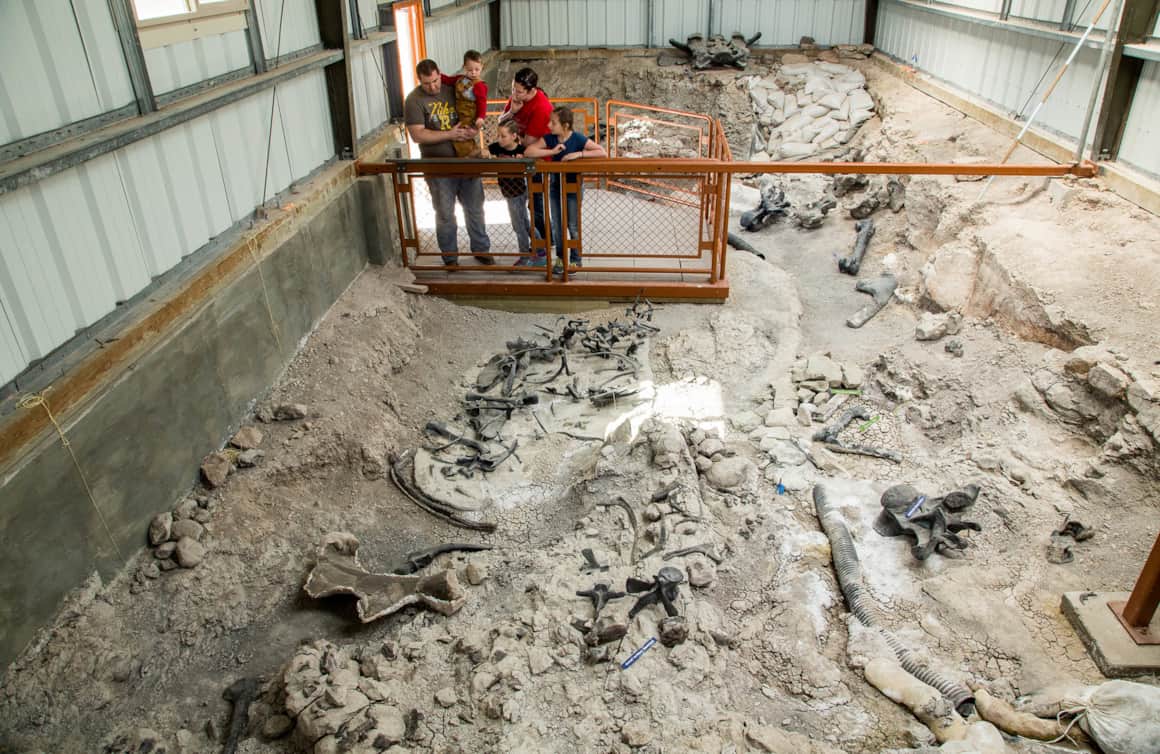
Of the many Allosaurus fossils uncovered across the state, the vast majority were excavated from the Cleveland-Lloyd Dinosaur Quarry.
Brine shrimp (State Crustacean) are a tiny but essential symbol of the Great Salt Lake’s ecological importance. Supporting millions of migratory birds, these microscopic crustaceans show how life adapts in extreme environments.
“Brine shrimp are critical to feeding the 10 million birds that visit our salty lake, and they are designated as Utah’s official state crustacean,” said Bonnie Baxter, director of the Great Salt Lake Institute at Westminster University. “Because of their ability to switch from live birth to encysted embryos, they can tolerate extreme conditions. I find it fascinating this animal can not only survive high salt, but also high radiation and drying.”
Visitors to the Great Salt Lake, Antelope Island and the Bear River Migratory Bird Refuge can see firsthand the significance of the brine shrimp to the ecosystem.
The quaking aspen (State Tree) in south-central Utah symbolizes the vastness of this state and the abundance that the land can provide. Pando, a massive colony of quaking aspen in Sevier County, is the world's largest tree and one of the oldest lifeforms on Earth. This incredible organism features a single root system stretching for miles; though its trunks appear separate, they act as one, nursing the soil and creating a thriving ecosystem.
“The landscape is impossible to ignore in Utah,” says Zachary Norman with the Utah Museum of Contemporary Art. “But contemporary artists use it as a way into bigger conversations about identity, community, history and the environment. Their work offers a deeper understanding of the places travelers are exploring.” (Read: A Journey Through Utah’s Contemporary Artscapes)

Brine shrimp are a tiny but essential symbol of the Great Salt Lake’s ecological importance.

Visitors to the Great Salt Lake, Antelope Island and the Bear River Migratory Bird Refuge can see firsthand the significance of the brine shrimp to the ecosystem.
The People’s Symbols of Utah
Many of Utah’s state symbols describe the people who learned to live, to work, and to thrive in an unsettled and wild land. People have lived in this part of the country for thousands of years, and you can see signs of these ancient Indigenous cultures in the petroglyphs and pictographs that they left behind.
Non-Native explorers first entered the region in 1776 via the Spanish Domínguez–Escalante expedition. And later, pioneers settled in the region.
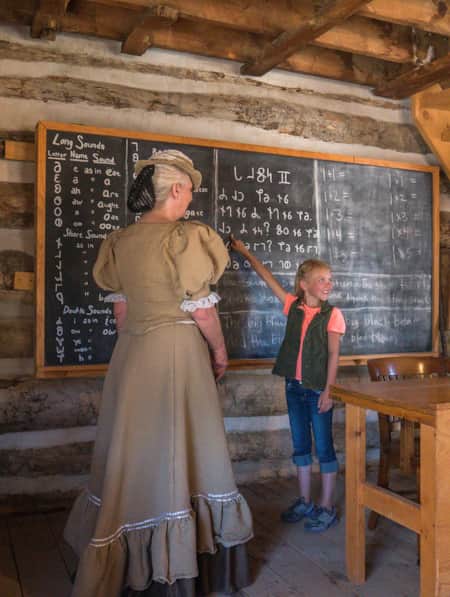
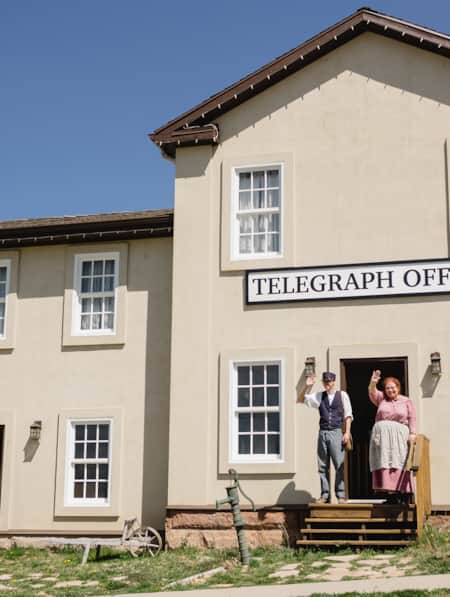
Utah’s pioneers were filled with grit. It was a requirement. They had to survive together, which meant they had to work together, had to live together, and create a cohesive sense of culture and identity. The pioneer hardiness that was needed to survive in this rugged western land is honored everywhere, from our flag to our state capitol to a rustic log cabin outside Bryce Canyon National Park. (Read: 10 Top Stops Along the National Pioneer Mormon Heritage Area)
The beehive (State Emblem) is one of the state’s most enduring symbols and motifs. It encapsulates the State Motto, “Industry,” along with hard work, unity and cooperation.
The beehive symbolizes working together, and being industrious to reach a common goal. When Brigham Young and the first pioneers arrived in the Salt Lake Valley in 1847, they had to rely on their own labor and their own collaboration to survive. Like busy bees in a hive, pioneers worked in cooperation with each other building a prosperous society in a harsh environment.
The symbol is also rooted in the Book of Mormon, where the word “Deseret” translates to honeybee. Now known internationally as “The Beehive State,” Utah’s defining symbol reflects core community values that endure to this day.

The Symbol of America’s Connection
Utah’s railroad history is inextricably linked with the history of the United States. In 1869, the transcontinental railroad was completed, and the Golden Spike was driven at Promontory Summit north of the Great Salt Lake. The coasts of America were finally connected.
Because the railroad tracks met in Utah, the state was immediately put on the map. Ogden’s old motto was, “You can’t go anywhere without going through Ogden,” which was true for travelers going across the United States; everyone had to change trains in Ogden.
What the railroad did for America is hard to overstate, proving to be a transformative technology with the ability to connect people and places easier than ever before.
One can only imagine the awe travelers experienced when they crossed into Utah on a train, rolling through the Wasatch Mountains, their granite peaks and snow-capped summits unlike anything someone from the East would have seen before. Those same peaks can still be seen from the train today, and Ogden’s Union Station (State Railroad Museum) stands as a symbolic relic of the railroad’s enduring legacy.
“Utah’s stories, history and traditions are also America’s stories,” says Chris Abbott, associate director of America250 Utah. “Communities are celebrating the values we hold as Americans, including freedom, innovation, resilience and grit.”


The Stories of Utah and Their Symbols
The story of the California seagull (State Bird) in Utah symbolizes the struggle early pioneers had when they first came to the state, and represents America’s hard-fought western expansion.
The seagull story is often called the Miracle of the Gulls. In the spring of 1848, the newly arrived Mormon pioneers had a hard time establishing their first crops. Early harvests were destroyed by late frosts and a general lack of water. To compound the issue, millions of Mormon crickets, a type of wingless katydid, swarmed their fields, devouring plants to their stubby stalks. For weeks, the settlers fought the swarms of bugs until miraculously, the gulls arrived.
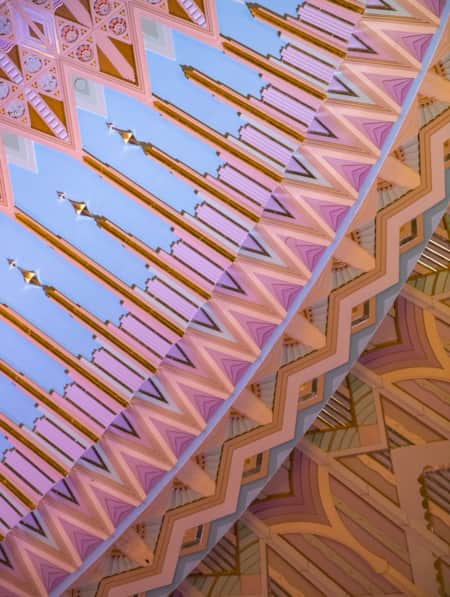
According to pioneer accounts, massive flocks of the gulls descended onto the fields, furiously attacking the crickets, saving the harvest, and thus the settlers from starvation. This symbol can be found across the state and in motifs on the State Capitol dome.
The story of the sego lily (State Flower) is also a story of survival. The perennial wildflower is known for its gorgeous, tulip-like white or pink blooms splotched with yellow and purple markings. Its historical significance is its use as a survival food for Native Americans and early Utah settlers.
Sego is a Shoshonian word thought to mean “edible bulb.” It grows well in many parts of the state, thriving in its sandy, dusty soils. It saved pioneers numerous times during Utah’s early years. During the First World War, the sego lily took on new meaning, as a symbol of peace, and was adopted by Utahns as an emblem representing home, mercy and freedom.

Celebrating Utah’s Symbols on America’s 250th
Every place has symbols, but few have such varied and deep representation as Utah’s. From a shrimp that thrives where almost nothing can, to a humble flower helping people survive, to seagulls swooping in to devour a swarm of crickets, the state tells its own story within the context and broader umbrella of the story of America.
“Communities of every size have come together to showcase — through symbols and shared history — the best of ourselves and our nation," says Nicole Handy, executive director of the America250 Utah Commission. “There is something for every Utahn of every generation to celebrate our country, reflect on stories that connect us as Americans, and enjoy locally as part of a national commemoration.”
Whether you find yourself standing beneath one of the largest trees on Earth, watching birds sweep over the Great Salt Lake, or walking to the iconic Delicate Arch, you’re experiencing more than just Utah. You’re discovering the symbols that continue to tell our nation’s story.
And in our 250th year, it’s worth remembering that our identity is shaped by our landscapes, defined by our people, and preserved through the symbols we honor and the stories we tell.


Discover the Museum of Utah
Located at the North Capitol Building in Salt Lake City, just steps from the historic Capitol Rotunda, the museum serves as the flagship for Utah’s cultural heritage

Play The Hits: Exploring Salt Lake City's Iconic Sights
Utah’s capital city boasts a unique history. It is rich in frontier history for sure but its story doesn't end (or begin) there. Experience the many layers of history, prehistory and contemporary culture.
Highlights
- Temple Square
- Utah Museum of Contemporary Art
- Natural History Museum of Utah
- Red Butte Gardens
More Stories to Inspire Your Travel
-

Tooele? Tuilla? The Fascinating History of this Utah Town
While the town of Tooele has a fascinating story to its name, the best part about one of Utah’s original counties is its history.
-
Utah Female Artists Explore the Sublime Through Art
See how Utah women artists are creatively interpreting a dramatic landscape into art.
-
Why a Visit to the Blanding Dinosaur Museum is a Must
The Blanding Dinosaur Museum, off U.S. 191 in Southeastern Utah, is a hidden gem: The artifact collection here includes bones, dinosaur eggs, and even fossilized skin! The museum also has three wonderfully preserved petrified trees and unique movie memorabilia.
-
Utah’s Unexpected Pit Stops
Here are 11 mini-adventures to check off your list next time you’re road-tripping through Utah.
-
Bryce Wildlife Adventure Museum
Explore wildlife near Bryce Canyon at the Bryce Wildlife Adventure Museum.
-
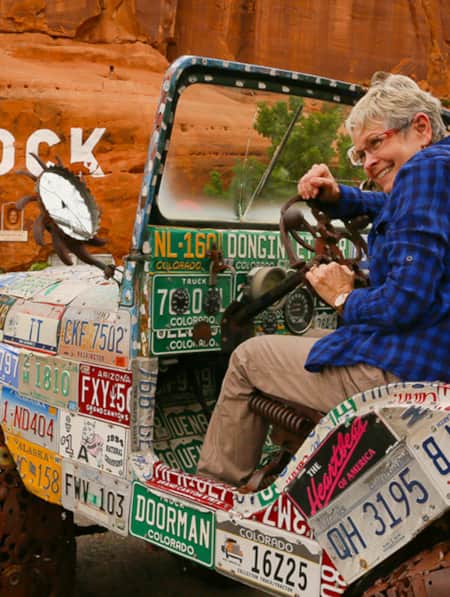
Hole N'' the Rock
Your road trip in Moab might call for a stopover at the famous Hole N” The Rock.
-
In Search of Robbers Roost
Robbers Roost Utah, one of the infamous hideouts of Butch Cassidy and his Wild Bunch, is not easy to find even with directions from the locals. Explore Utah.
-
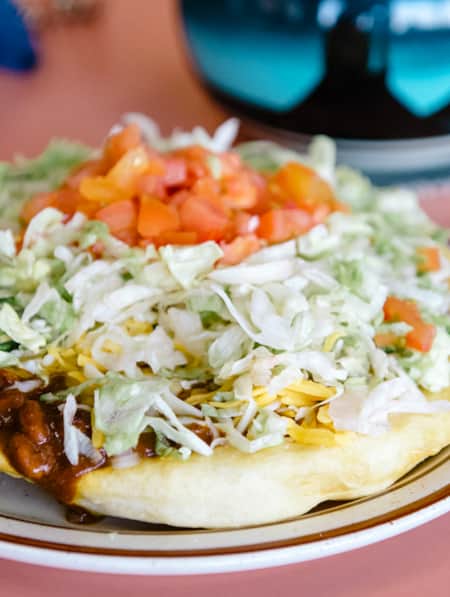
Navajo: Fry Bread, Tacos, Pizza
Despite its troubling origins, Navajo fry bread is an inspired food of the nation’s people, and it can be found in many forms with various names around the southwest.
-
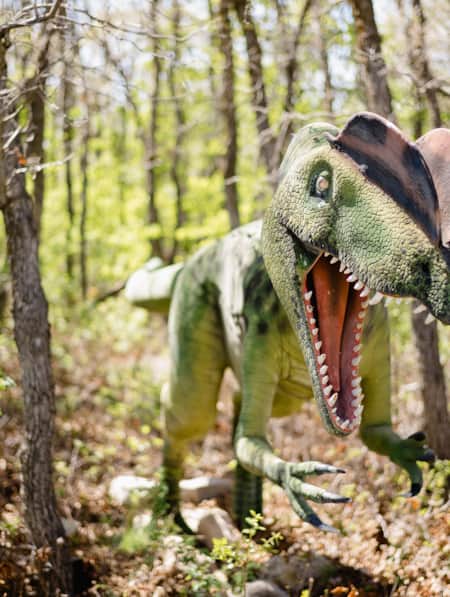
Time Traveling at Ogden's George S. Eccles Dinosaur Park
Many have dreamed of exploring jungles and forests only to discover a land filled with dinosaurs of all shapes and sizes? The George S. Eccles Dinosaur Park is the place to bring that dream to life, with 100-plus exhibits and realistic, full-sized dinosaur replicas, capturing the imagination of young and old alike.
-
The Legendary Joe McQueen: Utah's Original Jazz
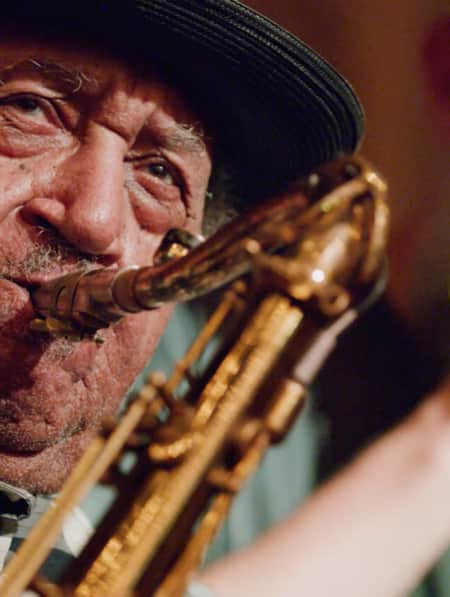
Legendary saxophonist Joe McQueen came to the city of Ogden , Utah, in 1945 for a two-week gig and he never left. For decades he was the musical godfather of Ogden's lively 25th Street.
-
Chasing John Wesley Powell: Six Places to Explore Utah's Green and Colorado Rivers
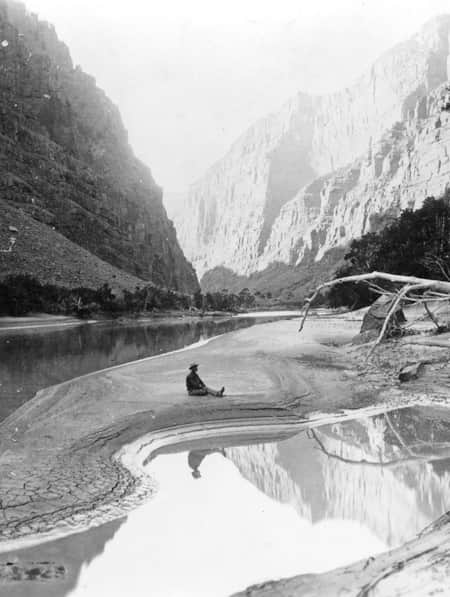
One hundred and fifty years ago a one-armed Civil War veteran set off with nine mountain men on a scientific expedition to map one of the last blank spaces left on the U.S. map: The Green and Colorado rivers. Much of the river remains wild today. Follow Powell's journey here.
-
Tracing the Outlaw Trail
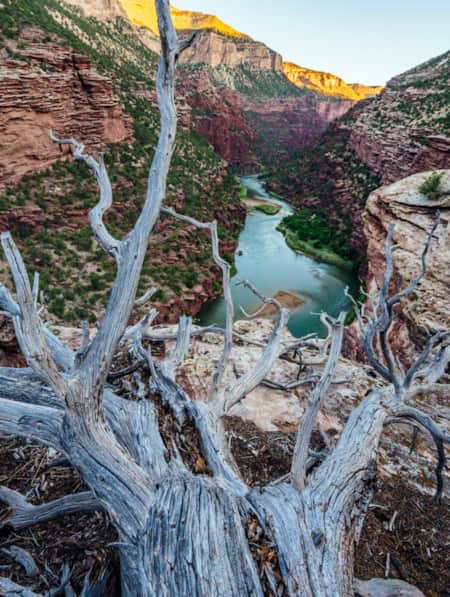
Cowboys and dinosaurs don’t always come to mind in tandem. At Dinosaur National Monument in northeastern Utah, however, they do share one thing: an incredible landscape as a backdrop. This landscape, as well as some wild history, make Dinosaur a must-visit part of the state.
-
Legacy and Craft
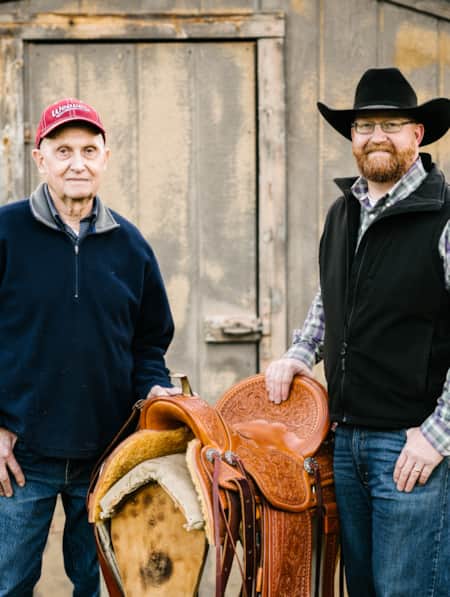
Three of Glen Thompson’s custom leather horse saddles are fitting examples of craftsmanship and a Utah folk art tradition. See more at the Chase Home Museum.
-
High Art & Hometown Americana
There’s no shortage of fun things to do in Logan, Utah. From theatre to arts and crafts to unique dining, we have your Logan guide. Check it out!
-
Kanab's Western Legends Heritage and Music Festival
Kanab's Western Legends Heritage and Music Festival is filled with round-the-clock Western-themed entertainment — think: music, cowboys and history.
-
A Matter of Geological Consent
A billion years of geological history surrounds Salt Lake City, where a modern landscape reflects ancient constraints.
-
11 Family-Friendly Activities Near SLC
From roller coasters to ski slopes, discover 11 fun family activities in and around Salt Lake City.
-
Utah’s Women Make History
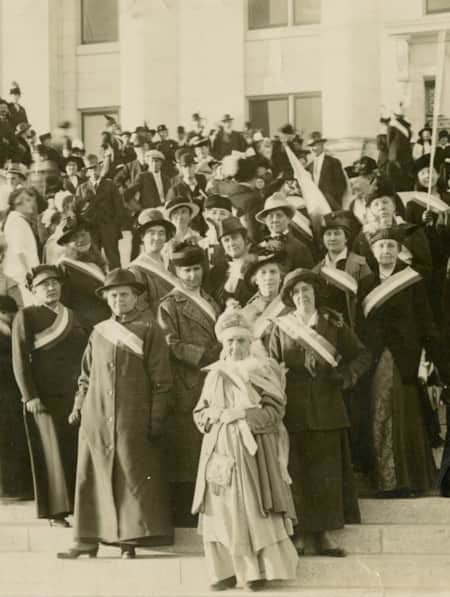
Walk in the footsteps of Utah’s earliest women’s suffrage leaders at sites throughout downtown Salt Lake City. Along the way, view public art installations commemorating voting rights and stop at trail-adjacent local women-owned businesses.
-
Movies Filmed in Utah: Plotting a Cinematic Drive-Through
Follow a Germany-based film enthusiast on an extended road trip to discover the rich history of Utah cinematography.
-
10 Places to Honor Women's History on Your Trip to Utah
Notable places you can visit where women have shaped history
-
Historical Sites in Utah
Explore Utah's fascinating past with our guide to historical sites and hidden gems. Uncover pioneer and indigenous stories at these Utah heritage hot spots.
-
Journey Through Utah's History at This Is The Place Heritage Park
This Is The Place Heritage Park has a major place in Utah’s history — quite literally.
-
Ancient Pictographs, Petroglyphs and Timeless Mysteries
Exploring Horseshoe Canyon isn’t for everyone. First of all, the effort to get there is an adventure in itself, but those efforts make the reward — namely, the chance to see up close some of the most significant pictograph panels in North America — even more noteworthy.
-
Art Deco in Motion: Ogden’s Creative Remodel
Visitors looking for Art Deco architecture and art often travel to New York, Chicago or Los Angeles. But the Intermountain West has preserved what may be Art Deco’s best-hidden gem: Ogden, Utah.
-
Explore Antelope Island's Fielding Garr Ranch
Volunteers Beth and Dennis Simonsen show visitors around the historic Fielding Garr Ranch complex on Antelope Island State Park in Northern Utah.