Rafting the San Juan River with Ancient Wayves Indigenous Guides

On a sunny spring day on the San Juan River in Bluff, Utah, the water is just cool enough, the sun just warm enough, and the clouds just billowy enough to make for a perfect float day. The kind where you lean back, feet trailing in the water, paddling semi-reclined to fully soak up the sun — and the relaxed pace of the river.
This stretch of river flows a murky tawny-sage, chilly this spring day and running low due to a historically meager snowfall this winter. Downstream near the famous Horseshoe Bend, the water is crystal clear, according to my Navajo guide, Geri Kee. But I don’t mind the cloudiness here; I’m happy just to be on the water, my sun hat pulled low, a full water bottle within reach, accompanied by guides whose ancestors have called this area home since time immemorial.
As we paddle west, to my right are Bluff and Bears Ears National Monument, the first monument created at the request of a coalition of Native American tribes. To my left, Navajo Nation, the largest reservation in the country. The San Juan flows along much of that border, the lifeblood of the region.

Rafting the San Juan River with Ancient Wayves
I float along in a solo ducky, a robust inflatable kayak, with Ancient Wayves River & Hiking Adventures — a 100% Indigenous-owned (Diné) company and the only Native American outfit in Utah to offer San Juan River rafting tours and Indigenous-led tours in Bears Ears. Along for the ride are a group of students and their teachers scattered between tandem duckies and a multi-person raft. We’re paddling down a leisurely stretch of river with no real rapids to speak of, a family-friendly afternoon float, but I know there are more adrenaline-pumping river trips available from Ancient Wayves and I make a mental note to come back another time to partake.
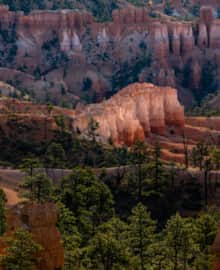
On both sides of the river, invasive Russian olive trees line the banks, sucking up precious resources and flanking the route in a soft sage green. Red rock cliffs offer a stunning contrast, and I peer up to spot wildlife and count the shades of orange and cream stacked in layers that tell the story of time itself.
But all the wildlife I spot are Canada geese who yell and gather their ducklings as we pass, a lone hawk soaring overhead and once or twice a cow in the bushes watching quizzically as we float by.
This morning, we started at a put-in that Ian Lameman, my other Navajo guide, called “Swinging Bridge.” I can’t find it on a map, and there is no bridge there, but he explains it’s a put-in you have to know about to find. The name, he tells me, comes from history: there was once a bridge here, used almost exclusively for Navajo children living on the reservation to cross the river in order to get to the mission schools in Bluff.
He and Kee are full of historical knowledge, interpretive facts and tales from the region. After all, this is their backyard. “A lot of us grew up on this river,” Lameman says of himself and fellow Indigenous guides at Ancient Wayves. He’s been guiding on the San Juan for five years.
“This is home, it’s personal,” Kee adds, who’s been unofficially guiding on rivers in Utah for many years and lives on Navajo Nation. This is her first year guiding with Ancient Wayves.
It’s the same for many Ancient Wayves guides, all of whom are Indigenous. Louis Williams, company founder, and both my guides today are Navajo, but Zuni, Hopi and Apache guides lead trips down the river and across the landscape, most of whom have deep ancestral ties to the region and the land itself.

There are plenty of beaches along the San Juan River to stop and take a break.

Ancient Wayves offers rafting adventures along the San Juan River, including Sand Island, Montezuma Creek, Mexican Hat and the Clay Hills.
The Story Behind Utah’s Only Indigenous-Owned River Outfitter
In fact, Williams was driven to start the company in 2020 because of those personal ties. He’d spent years guiding for other river outfitters and found that guests repeatedly requested Indigenous guides on their trips. “We were very much in demand,” Williams remembers. “I was like, this is our backyard, the Navajo Nation, and there aren’t really any Indigenous river guides out here.”
So he sought to fill the void by giving other Indigenous guides a chance to share their land, heritage and wisdom in their way.
The result is a deeper connection to history and culture, one that has earned Williams and Ancient Wayves the 2025 JRNY Magazine America Award for top tourism experience in the United States, as well as the 2026 Navajo Nation Tourism Business of the Year award.
Williams wasn’t my guide today, but when I talked with him later, he spoke in a slow, relaxed cadence that mirrored the wide, wandering sections of the San Juan I’d just floated: not in a rush to get anywhere, just one sentence unhurriedly flowing into the next.
“Many are drawn to this region because of the history. They want to hear stories of this landscape from people who are connected to the region. That’s what we’re here for,” Williams says. After all, when you’re as deeply tied to a place as Ancient Wayves guides are, credibility is practically baked in. “All their stories are out there on the landscape.”
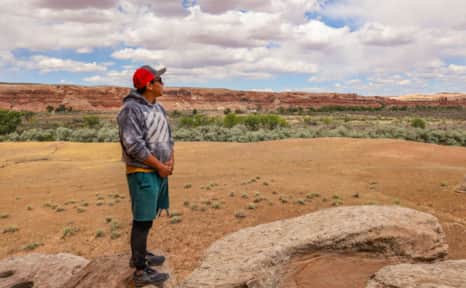
Each of the river guides at Ancient Wayves have deep ancestral ties to the Bears Ears region and the land itself.

A short hike to an ancestral Pueblo archeological site with petroglyphs and the remnants of buildings would be unreachable by most visitors.
Exploring Ancestral Pueblo Sites and Native History
As we float, Lameman talks about geology, shares stories, identifies plants and offers historical insight about Mormon settlers and uranium mining.
At lunchtime, we stop on a narrow stretch of rocky bank for a colorful meal. Lameman then leads the group on a short hike to an ancestral Pueblo archaeological site, home to petroglyphs and building remnants that would be unreachable for most visitors. He points out pottery shards resting on the soil in the sun and instructs us to leave what we find.
Honoring Sacred Landscapes
As a sign of respect, I take no photos of the petroglyphs, which sometimes mark sacred burial sites for Pueblo societies.
"There's a spirit that resides here,” he says. "Not just the spirit of the land, but the spirits of people who have come before. Both are meant to be left in peace and reclaimed by the land, not other humans."
As we wander, he speaks of those people and their history, how they transitioned from a transient hunting culture to a more stationary agriculture-driven one as corn, beans and squash were introduced from Mexico.
In the afternoon, the wind picks up and the leaves of the cottonwood trees on the banks begin to chatter, calling to one another over our heads across the river. The water carries us slowly and we aren’t in much of a rush, so I chat with Kee and listen to stories of her love for the surrounding landscape and what it’s like to guide with an Indigenous-owned company.
“The water means a lot. It's got power. It's got life,” Kee says. “The water is a place I go to reset, breathe and enjoy.” And guides take the job of protecting and honoring the region seriously.
As for the company name and its unique spelling, “I had to squeeze that ‘y’ in there,” Williams says. I can hear him grinning through the phone. “It’s a perfect name for what we do. When we’re out there, we’re reminded of the ancient 'way' of my grandparents and ancestors. We still know that ancient way.”
Combine that with the rhythmic movement of water, and you have a name that means something –– that celebrates the intimate relationship between heritage and landscape.
Indeed, the river is a magical place, and it's not just the area’s Indigenous cultures that find themselves drawn to the spirit of the water. It's me, too, a traveler with an open mind, two ears to listen and a heart to understand.
"When we’re out there, we’re reminded of the ancient way of my grandparents and ancestors. We still know that ancient way."
– Louis Williams, Founder of Ancient Wayves
How to Book a Bears Ears or San Juan River Tour
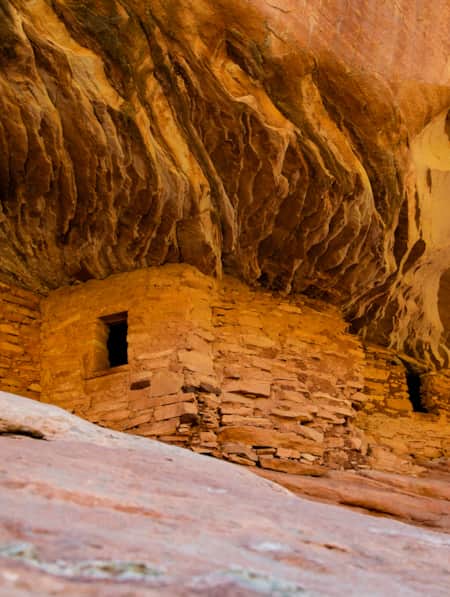
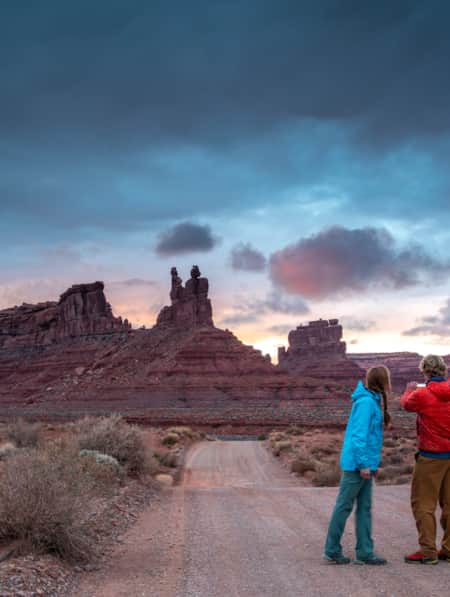
Ancient Wayves offers one- to seven-day river trips on the San Juan. Day hikes with Navajo hiking guides (and other cultures) and backpacking trips in Bears Ears and Valley of the Gods are also available. There, guests are led to historically and archaeologically significant sites like House on Fire, the Citadel, Moon House and more.
Bears Ears Packing List
Bring plenty of water, snacks, sunscreen, a hat and sun protective clothing, sunglasses, a dry bag for river trips and durable footwear for hiking trips.

Bears Ears Area Starter Kit
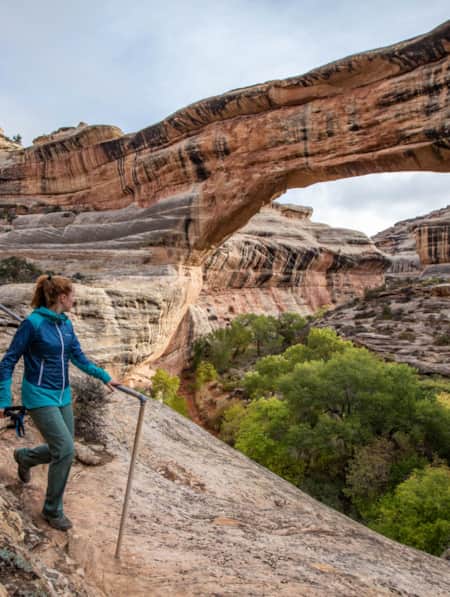
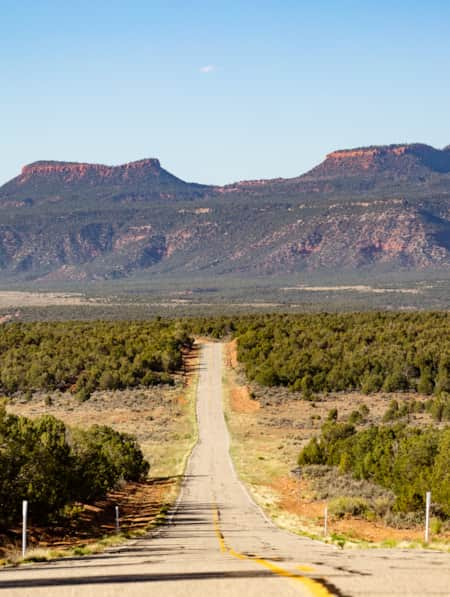
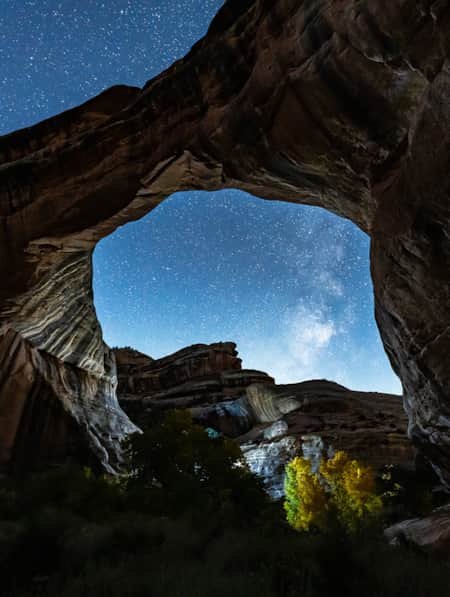
A pair of distinctive, towering buttes stand against beautiful scenery. We call them "Bears Ears." With the help of local expertise, respectfully explore ancestral cliff dwellings and massive natural bridges in a fascinating desert ecosystem.
Highlights
- Edge of the Cedars State Park
- Ancestral Puebloan Dwellings
- Hovenweep National Monument
- Natural Bridges National Monument

A Southern Utah Adventure: The Best Spring Break Ever
Southern Utah, a giant playground from Brian Head to Zion, offers epic outdoor adventures perfect for teens. This road trip lets families reconnect, swapping screens for snow skis and paddleboards.
Highlights
- Salt Lake City
- Great Salt Lake
- Brian Head Resort
- Zion National Park
- Cedar City
- Kolob Canyon
- Wire Mesa Trail
- Quail Creek Reservoir

Stories To Inspire Your Travel
-

Across a Snow-Covered Desert
Follow this itinerary for a week-long winter road trip across the snow-covered desert of Southeastern Utah.
-
Touring Utah with the State’s Most Well Known Women Writers
The diversity and beauty found in Utah has often been captured by women. Here are the places that seven of Utah’s most well known women writers knew and loved most.
-
Turning the Lens on a Wintry Southern Utah
Discover some of the most picturesque places to photograph in Southern Utah, and learn some tips for how to shoot and travel responsibly.
-
How to Visit Bears Ears National Monument
The Bears Ears Education Center offers essential travel tips, safety info and maps for visitors to the region.
-
The Voices of Bears Ears
Bears Ears National Monument is at the heart of southeastern Utah. These lands are imbued with layers of culture — layers of life. In this four-part video series, meet the locals who connect with the land in their own distinct ways.
-
Filmed in Utah: 7 Itineraries Through Hollywood's Most Iconic Settings
While Utah's striking scenery makes it a go-to for filmmakers, the state is equally a must-visit for road-trippers and outdoor adventurers. Here are a few film and television-themed trips and tips to consider for your Utah visit.
-
Chasing the Dark in Bluff Utah
Bluff's Dark Sky Festival invites stargazers to come celebrate the night sky with stories from Indigenous astronomers, constellation tours and telescope viewings.
-
Finding Strength and Inspiration Deep in the Utah Desert
How a series of hiking and camping trips in Utah’s parks and wilderness put Elisabeth Brentano on a transformative journey from urbanite to nature lover.
-
An Adventure Guide to Harts Draw Road
Winding up into the Abajo Mountains of southeastern Utah and down into sprawling red rock canyons, the 18-mile Harts Draw Road offers the perfect mixture of snow and sand, scenery and solitude.
-
A Life Elevated Road Trip
Hit the road with Aaron Millar, host of The Armchair Explorer podcast, as he takes an adventure tour of Utah — complete with audio postcards along the way.
-
The World's First Dark Sky Park
On March 6, 2007, Natural Bridges National Monument became the first International Dark Sky Park certified by the International Dark-Sky Association. More than 100,000 people visit Natural Bridges each year to check out the stunning bridges and hike in cool canyons, but only a handful of them stay through the night to see the area’s most amazing and unique feature: dark skies and glistening, bright stars.
-
Exploring Mule Canyon: House on Fire and Cave Tower
Driving the up the dusty, terracotta-colored road toward Mule Canyon in Cedar Mesa, you get a sense that this is a special place, though you might not be able to put a finger on why.
-
Utah’s Unexpected Pit Stops
Here are 11 mini-adventures to check off your list next time you’re road-tripping through Utah.
-
The Art of Supporting Utah Artists
Here’s a look at six local artists whose work draws upon Utah’s diverse environments as inspiration.
-
Winter in Southern Utah Like a Local
Southern Utah comes alive in winter with unexpected experiences for those who are well-prepared and solitude for those who want to expand their view.
-
Navajo: Fry Bread, Tacos, Pizza
Despite its troubling origins, Navajo fry bread is an inspired food of the nation’s people, and it can be found in many forms with various names around the southwest.
-
An Uncommon Confluence
A solo sojourn where snow and desert meet in a lesser-known corner of Utah’s red rock country.