Chasing the Dark in Bluff, Utah
In Utah’s canyon country, a new kind of festival is teaching travelers to look up.

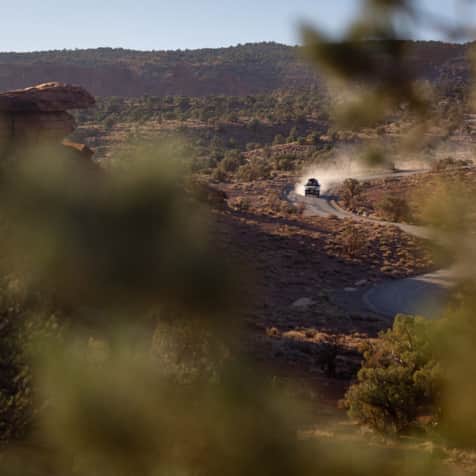
Surrounded by the endless expanse of the Colorado Plateau, I ventured deeper into Utah’s canyon country. I was driving through some of the state’s most dramatic terrain, a landscape where sudden arroyos open up the earth like trapdoors and where an inch of rain transforms parched washes into tributaries. This geologic lawlessness creates a land of awe-inspiring beauty, drawing thousands upon thousands of visitors per year.
But I wasn’t here for the sightseeing – at least not in the traditional sense.
An Astrotourism Paradise
I was headed where I could see some of the darkest skies in the United States: Bluff, Utah, a tiny desert outpost hidden deep in the Four Corners region surrounded by sculptural pillars of orange sandstone and arid mesas. Bluff is largely known for its proximity to the iconic Monument Valley Navajo Tribal Park; increasingly, though, it has become a hotspot for astrotourism. Clean and dry air, high altitude and an utter lack of light pollution create the perfect conditions for basking in the cosmos.
In June 2025, Bluff was recognized as an International Dark Sky Community; local residents rode that momentum to plan the inaugural Bluff Dark Sky Festival. The two-day outerspace extravaganza was to consist of presentations, community events and star parties. I would be pulling into town right as the festivities began.
As the miles passed behind me, the landscape was remolded like putty. Intricate clifflines shrank and disappeared in the rearview mirror, replaced by an infinite stretch of high plains. A few minutes later, the red slopes on both sides of the valley drew in closer once again, folding me into the topography. This meant I was nearing Bluff.

The Festival Begins
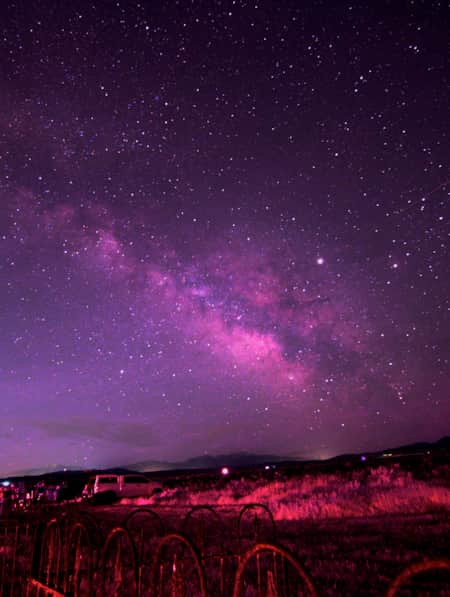
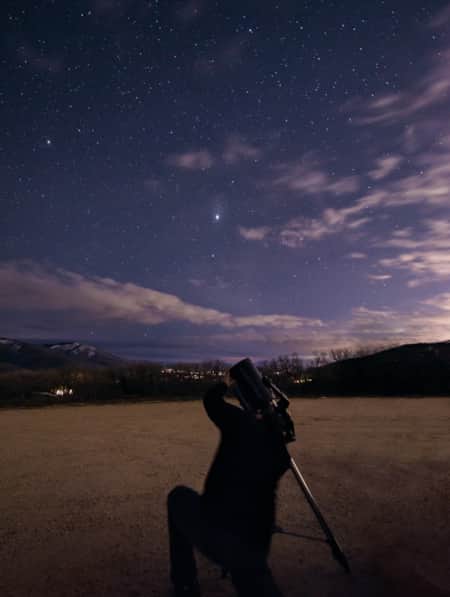
I slipped between rock formations and into town. With a lull in my schedule, I retired to my lodging to recover after a long drive. An hour later, a few flecks of light were already poking out of the purple sky. Hopping back in the car, I drove to Bluff Community Center, a nondescript building surrounded by swarms of volunteers setting up telescopes illuminated by the gentle lights of their red headlamps. (A word to the wise: red lights preserve your night vision far better than the white light of a typical flashlight.) (Read: Tips for Astrophotography)
The first speaker of the evening was Kevin Schindler, a Lowell Observatory historian who had traveled up to Bluff from Flagstaff, Arizona, to give a spirited and approachable talk on the basics of astronomy. Then, calling in via Zoom from his homebase in Ohio, the astronomer Dean Regas gave the crowd a tour of the universe. With the anticipation properly built, the speakers wrapped up and we were all ushered back outside.
"Perhaps more than any other place in Utah, the cosmos dance in Bluff."

Party Beneath the Stars
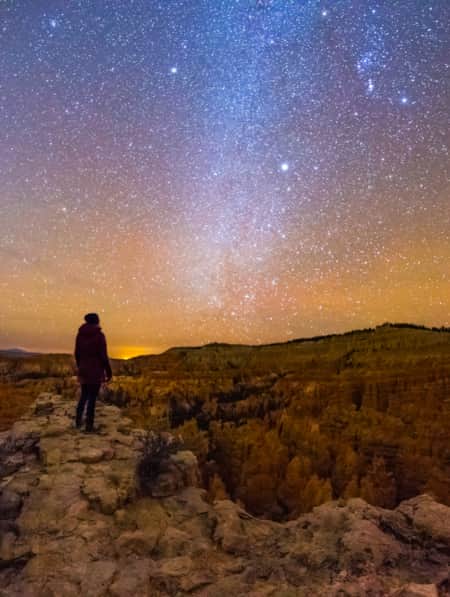
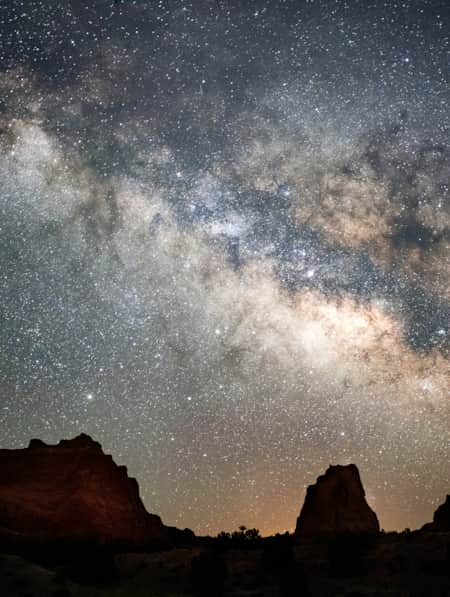
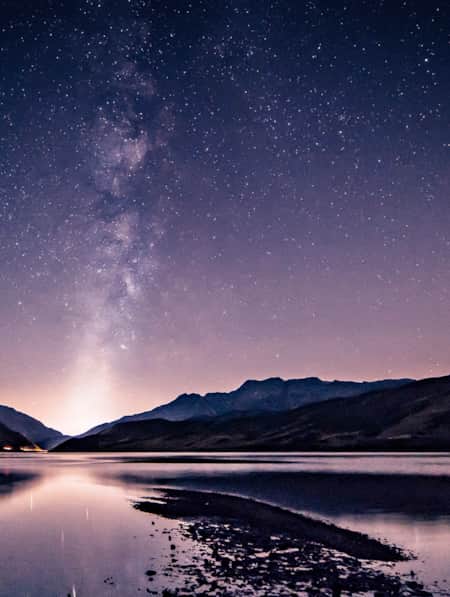
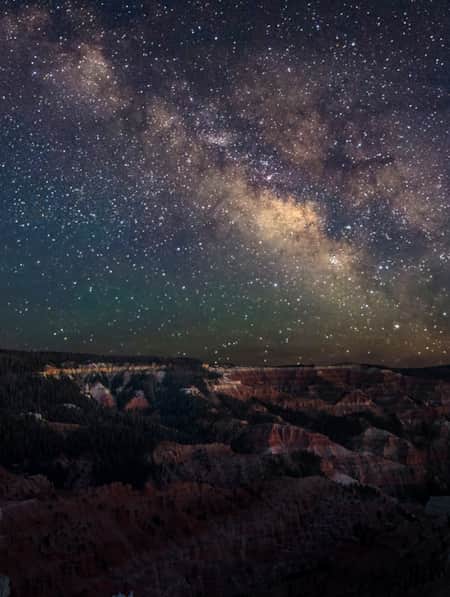
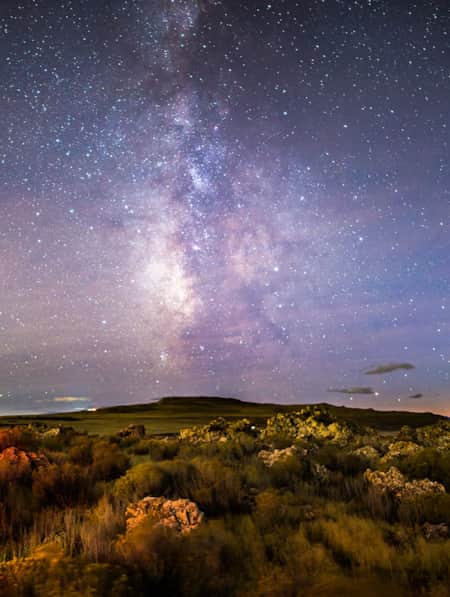
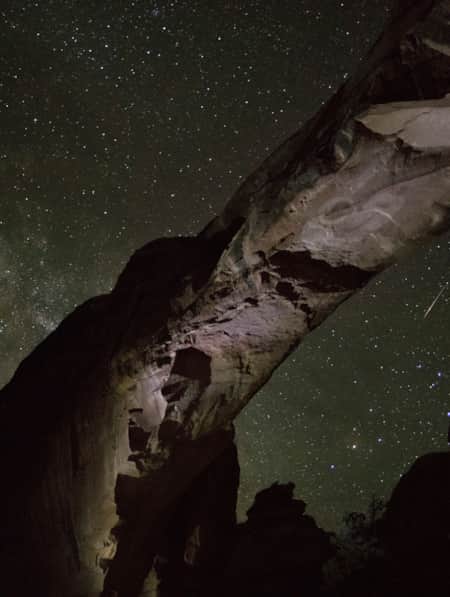
During the short time that we had been indoors, the sky had come to life. Perhaps more than any other place in Utah, the cosmos dance in Bluff. The sky was cracked down the middle by the Milky Way, opalescent like a freshly-split geode. Stars spilled out of it, settling into the moonless sky and blinking in the inky-black darkness. Slowly, I began to move from telescope to telescope, each one showing something new: Polaris, the striking North Star; the Pleiades, a cluster of glistening stars that grows fainter the closer you look; a single star that, upon careful study, reveals itself to actually be two nearly sat atop one another. Planets, nebulas and even other galaxies revealed themselves through the equipment operated by a ragtag crew of volunteers and enthusiasts.
Coming to the last telescope of the night, I began speaking to the operator. He was from Price, Utah – another great spot for stargazing. When I asked him about how he got started, I could see his face soften beneath the ruby gleam of his headlamp. “My friend got a telescope, a real good one, when I was 12. I used to go over there and we would spend the entire night just looking at whatever we could. I can still remember it really clearly.” His words began to slow. “We had so much fun.” Under the same sky that he spent countless nights gazing into as a boy, he was being transported back in time. He was quiet for a moment. I was quiet too. Then, with a blink, he was back. Adjusting the telescope to point at some other deep sky object, he said, “anyway, uh, wanna see something cool?”
Universal Connections
The following evening, I was seated once again in the Bluff Community Center. The crowd seemed even larger, and there was a more intense energy in the air. Kids were playing games, running frantically back and forth; adults chattered enthusiastically to themselves.
Taking to the stage tonight were PhDs Nancy Maryboy and David Begay. Their discussion was an eye-opening look at their research on constellations in Navajo culture. They had to pull from a deep well of knowledge – primarily history and linguistics – to discover, understand and catalog Navajo constellations, many of which had been lost to time.
After Nancy and David was Don Mose, Jr., a Navajo elder, storyteller and guide. Clad in blue jeans and a cowboy hat, he spoke about his work as a young man documenting and preserving the Diné language for the Rosetta Stone computer software. This led to a remarkable request for him to fly to Russia to document indigenous languages in Siberia. Don, having never left the country before, accepted. While there, he discovered groundbreaking linguistic connections between the Navajo and the indigenous tribes of Siberia, reframing ideas about Navajo origins.
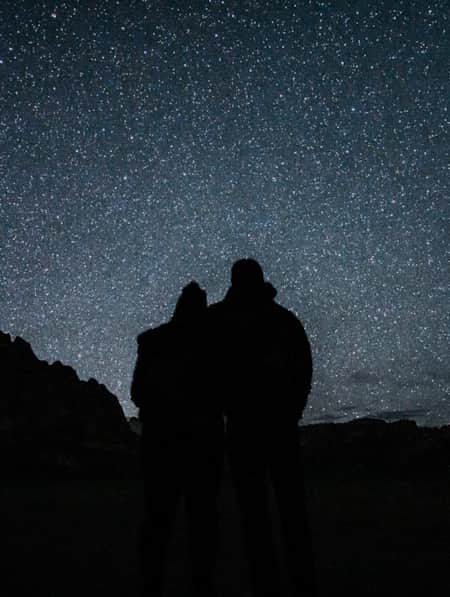
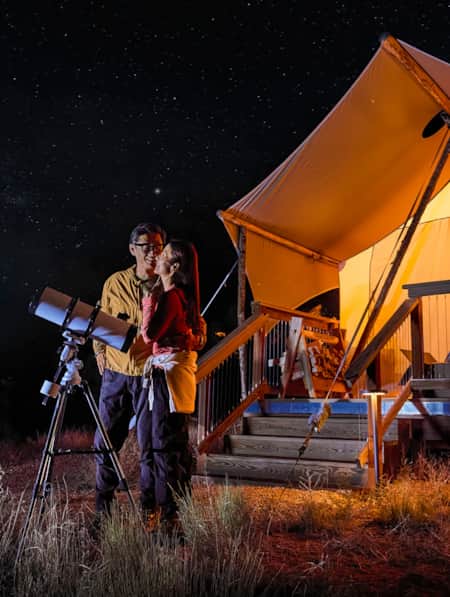
As Don spoke, I looked around the audience and saw a young couple. Their heads were pressed together, eyes closed shut, listening intently. Tonight’s presentations, for them and many others in the audience, seemed to be shedding light on crucial questions about their culture and history.
With the presentations finished, I went back out into the night. The stars seemed to be even brighter than last night, minute pinpricks of incandescence shining like crystals. As I again walked from scope to scope, I listened to the sounds of the festival: a din of “ooh”s and “aah”s, the soft laughter of children playing, the quiet rustles of couples huddling together in the night. More than an opportunity to look at pretty stars in the sky, this was a holistic celebration of what dark skies represented: people from all walks of life finding community and connecting over something beyond them, something unexplainable and universal.
For a moment, I stood silently and looked up. I wondered what constellations had caught Don Mose’s eyes all those years ago in the frigid, foreign Siberian tundra, 5,000 miles from home. I then leaned over and gazed into an eyepiece. In the center of the field of view was a pale orb, split horizontally by a delicate line. More than 800 million miles away from Bluff, Saturn quivered.
Clouds began to gather on the edges of the sky as the festival’s second and final night drew to a close. Rain was in the forecast for the next day. That’s alright, I thought. The stars would still be there once the storm cleared.

Bears Ears Area Starter Kit
A pair of distinctive, towering buttes stand against beautiful scenery. We call them "Bears Ears." With the help of local expertise, respectfully explore ancestral cliff dwellings and massive natural bridges in a fascinating desert ecosystem.
Highlights
- Edge of the Cedars State Park
- Ancestral Puebloan Dwellings
- Hovenweep National Monument
- Natural Bridges National Monument
Stars by the City
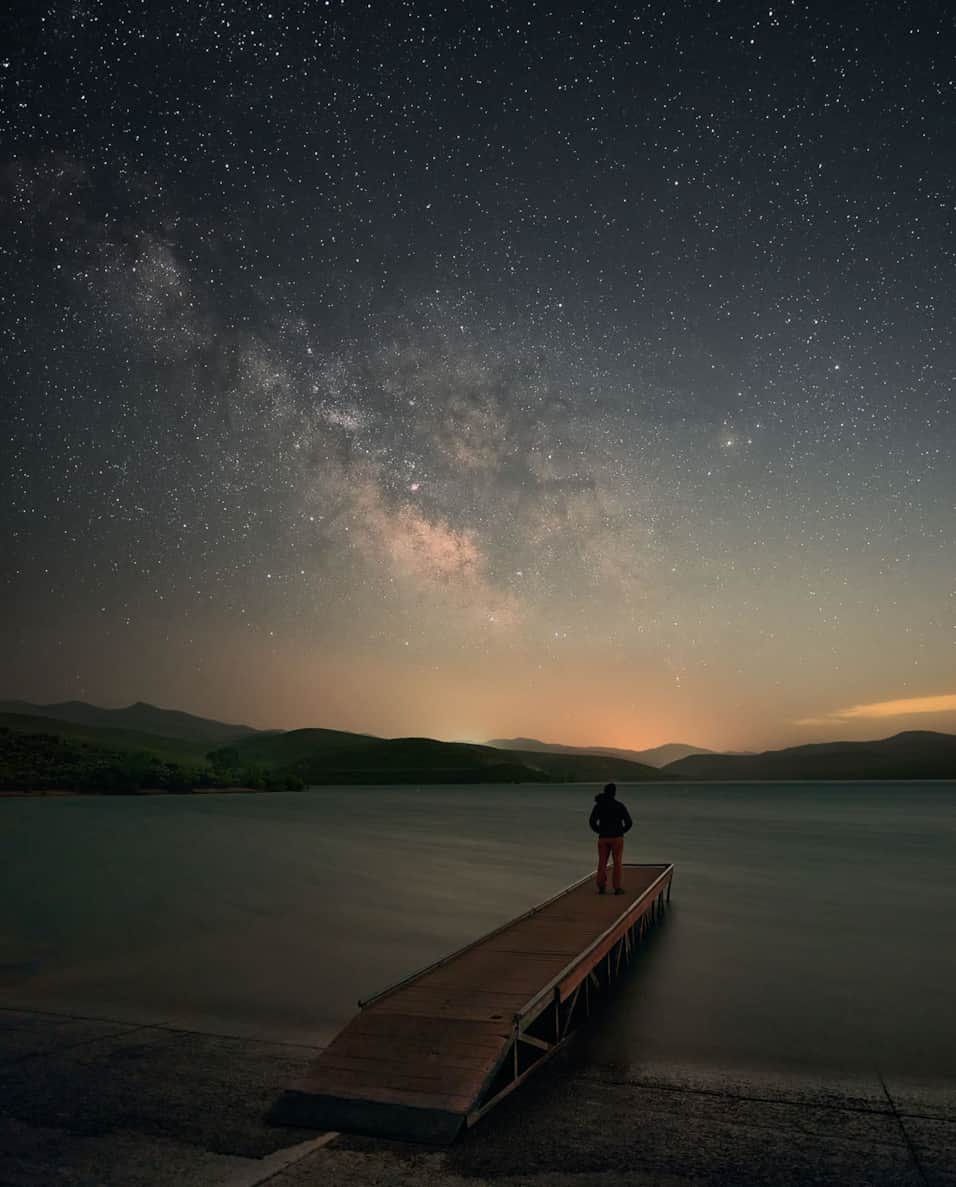
Fill your days with adventure and your nights with stargazing by following this six-day itinerary from Salt Lake City through the International Dark Sky Places in Northern Utah.
Highlights
- Timpanogos Cave National Monument
- East Canyon State Park
- Jordanelle State Park
- Rockport State Park
- Antelope Island State Park
- North Fork Park
- Helper
Hoodoos and Stars
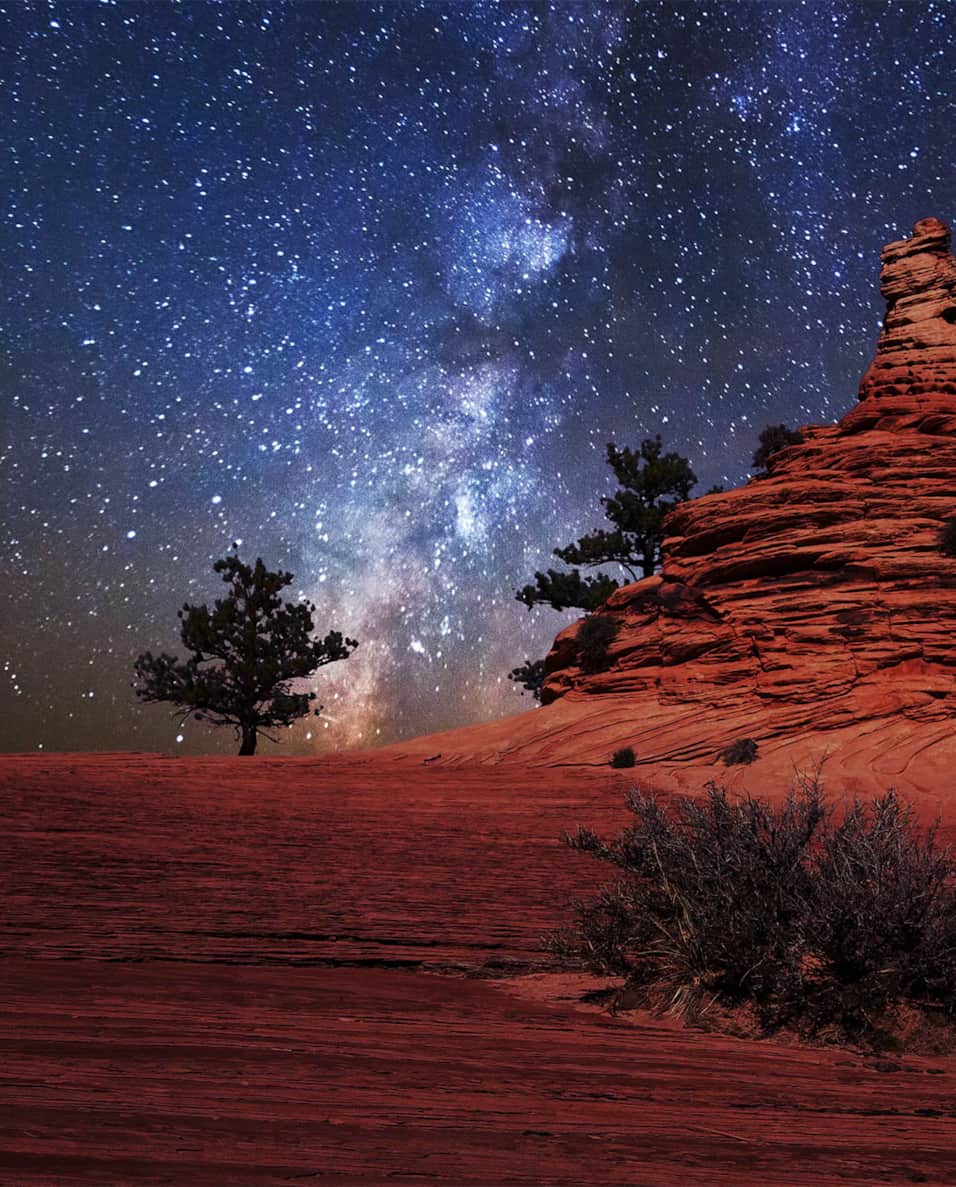
Hoodoos and Stars takes advantage of the proximity of Zion, Bryce and Capitol Reef national parks to slow down and also experience some of the must-see southwestern Utah landscapes and experiences along the way.
Highlights
- Zion National Park
- Bryce Canyon National Park
- All-American Road Scenic Byway 12
- Capitol Reef Country
- Kodachrome Basin
Red Rock & Dark Skies: Stargazing the National Parks
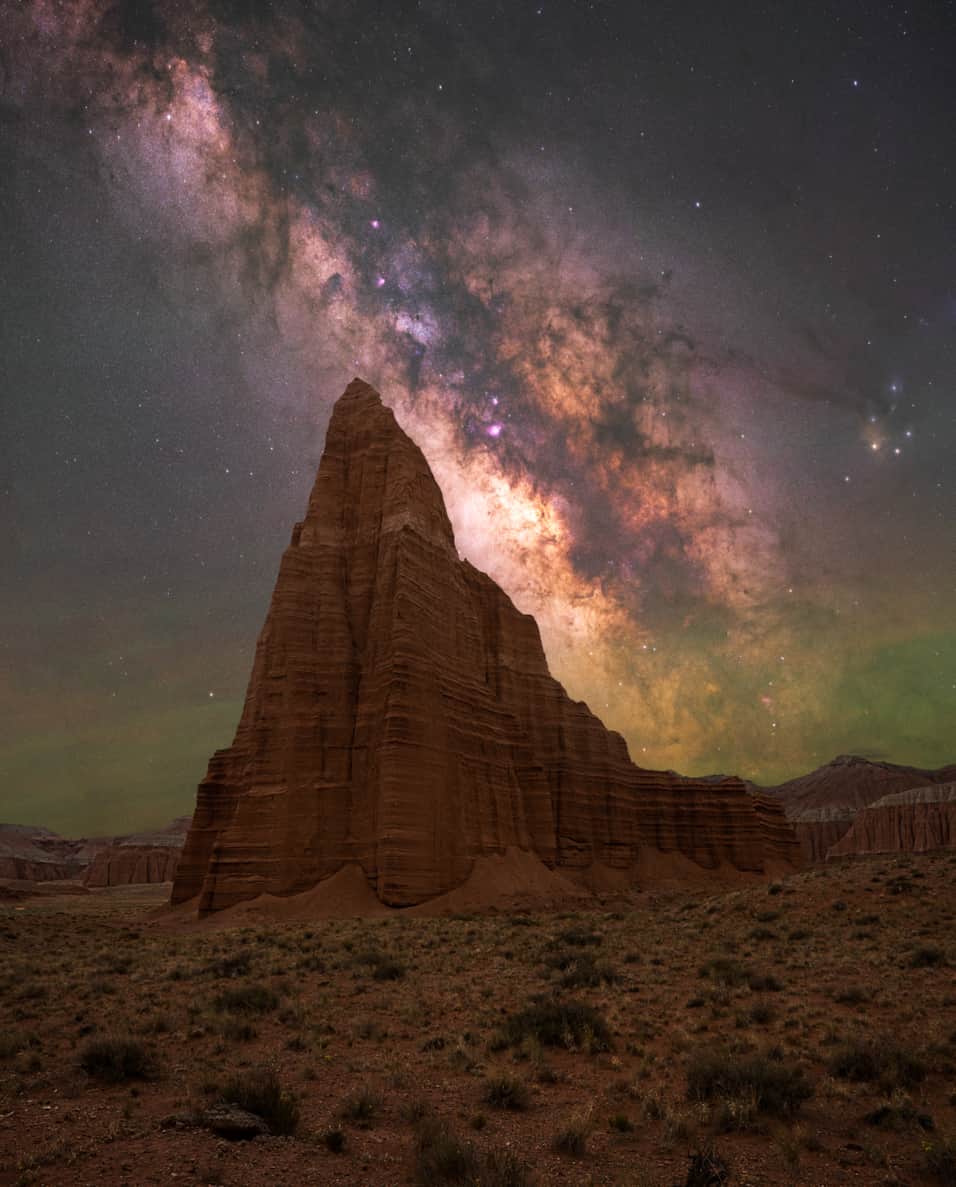
This road trip through southwest Utah takes you to four of Utah’s best places to see the Milky Way — Capitol Reef National Park, Kodachrome Basin State Park, Bryce Canyon National Park and Cedar Breaks National Monument.
Highlights
- Hell's Backbone Grill
- Bryce Canyon Lodge
- Ranger-led Star Programs
- Road Trip Southwest Utah

Stories To Inspire Your Travel
-

Discover Utah’s Top Stargazing Spots
A Q&A with astrophotographer Bettymaya Foott on the wonder of the night sky and the best places to spot the stars in Utah.
-
Tips for Astrophotography
Need tips on how to take pictures of stars? Utah is the perfect location to put tips from an award-winning photographer into action.
-
Find a Winter Refresh in a Utah State Park
The best Utah state parks will entice you with ice fishing, white sand and snow-dusted scenery. Take a winter break to refresh with a visit to a few of these places.
-
State Park Stargazing: Interacting With the Galaxy in Real Time
Northern Utah's Camp Floyd State Park offers more than history to those who stick around after dark. With intense dark skies blanketing the atmosphere, stargazers of all ages gather to interact with the galaxy above.
-
Antelope Island State Park: A Guide to Utah’s Great Salt Lake Treasure
Visit the largest island on the Great Salt Lake to spot roaming bison and spend your nights camping under a blanket of stars.
-
A Closer Look at North Fork Park
Welcome to North Fork Park, one of Utah’s multiple International Dark Sky Parks, just minutes from downtown Ogden. While it is best known for its stunning scenery where hikers and Nordic skiers can meander the trails swirling through the mountainous Ogden Valley, its biggest attraction lies in the voluminous sky directly above.
-
Looking Up: Dark Skies of Heber Valley
A trio of state parks in Heber Valley offer stellar views of the Utah night sky. Come stargaze here.
-
Reclaiming the Stars: Utah’s Dark Sky Initiative
Utah's Dark Sky Initiative helps state park visitors experience the cosmos by protecting night skies, encouraging astrotourism and promoting stargazing.
-
A Party of Astronomic Proportions
Every Saturday from May through Labor Day weekend, weather dependent, crowds ranging from 100 to 500 people gather at Cedar Break’s main overlook, Point Supreme, to gaze up at the region’s amazing dark skies and explore the stars and the planets that make up the solar system.
-
Feeling Small in Big Country With Stargazing Zion
On an expert-led stargazing tour of Zion National Park, an astronomy guide illuminates the brilliance of the cosmos.
-
Where to Find the Darkest Skies in Central Utah
A tapestry of thousands of stars awaits visitors to Helper and Price where conditions are some of the best for exploring the night sky.
-
The World's First Dark Sky Park
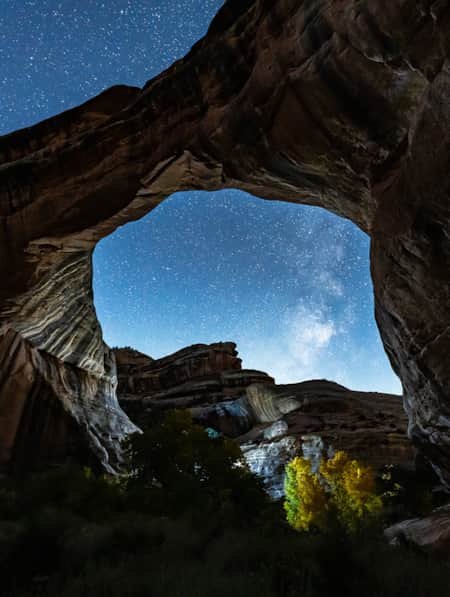
On March 6, 2007, Natural Bridges National Monument became the first International Dark Sky Park certified by the International Dark-Sky Association. More than 100,000 people visit Natural Bridges each year to check out the stunning bridges and hike in cool canyons, but only a handful of them stay through the night to see the area’s most amazing and unique feature: dark skies and glistening, bright stars.
-
Seeking Starry Skies Near Salt Lake City
You don’t have to go far from the city to find dark skies filled with stars in Utah. Find out where you can see the Milky Way near the city or gaze into space from an observatory in Northern Utah.
-
Dark Skies in Capitol Reef National Park
Capitol Reef National Park in Utah is a designated International Dark Sky Park. Make plans to come see the most magnificent night sky ever!
-
Ogden Activities: Downtown to Dark Skies
Two days' worth of sun-up-to-sundown Ogden activities — eat, shop and bike where the locals go, end at an International Dark Sky park.
-
How to Stargaze in Utah
Tips on what to pack and when and where to go stargazing in Utah.