Explore Arches Thoughtfully
Give yourself extra days to take in the full Arches region. A drive through nearby Moab, with its canyon-country backdrop and Main Street buzz, makes clear why this town is one of the American West's premier hubs for outdoor recreation. Mountain bikers, river rafters, climbers, canyoneers and off-roaders all call it home base. The Complete Arches Trip itinerary will help you make the most of your time here.
Visiting gateway communities like Moab, Green River or Monticello is also a chance to support local businesses. These towns offer lodging, dining, shops and guided outfitters to enhance every part of your visit.
Responsible Travel Tips
-
Check the Weather
Be sure to read the weather forecast and understand how the climate and conditions will impact your day’s outing and be aware of your own limits. Pack accordingly and be sure to bring enough water, food, proper clothing and sun protection.
-
Get the Latest Information
Check the current regulations and suggested guidelines for the places you intend to visit. For the latest information, visitors may follow Arches National Park on Twitter and Facebook or check nps.gov for the latest park alerts and conditions.
-
Make a Plan
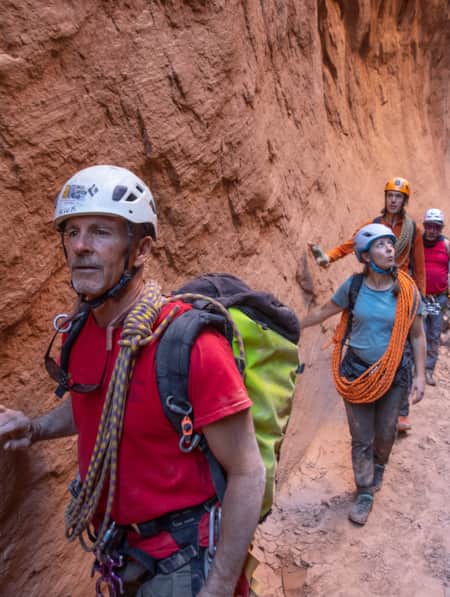
Create a trip plan and make sure someone knows where you are going and when you will return. Don’t expect cell phone service to work, having a printed map is always helpful. Be aware of potential hazards, including wildlife, lightning, flash floods and extreme heat. Assess your abilities, goals and skills and make sure your planned activities are a good match. Reach out to a park ranger if you’re unsure.
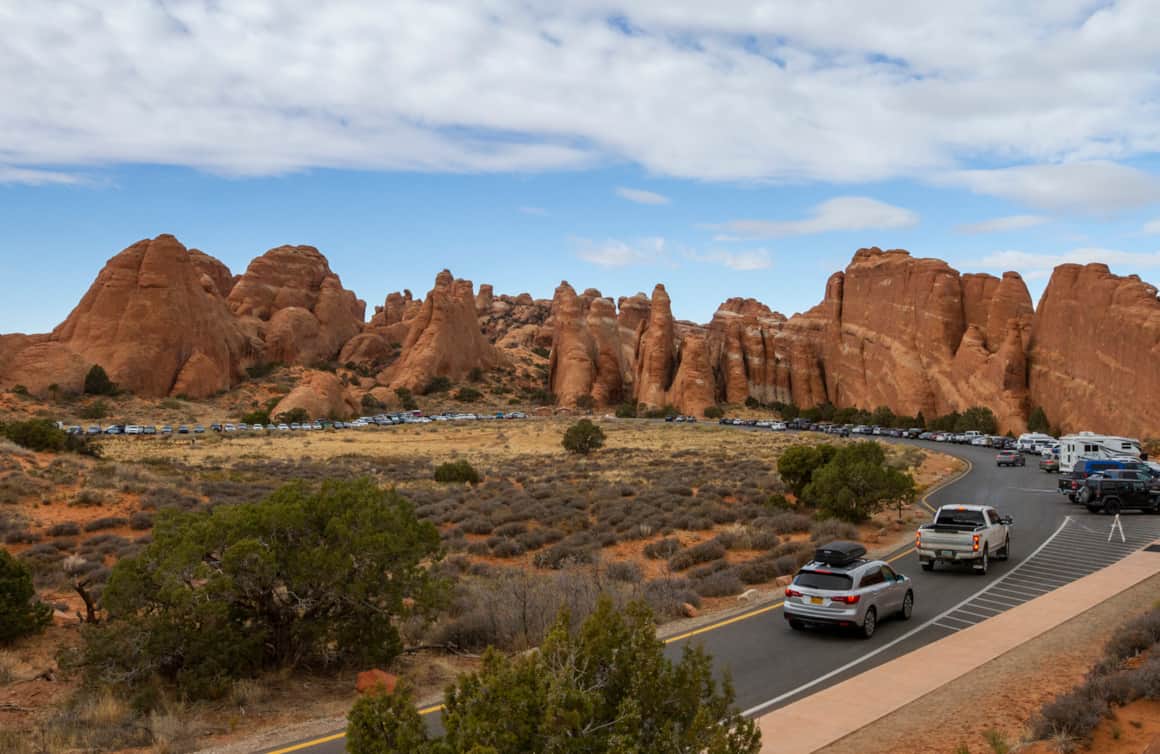
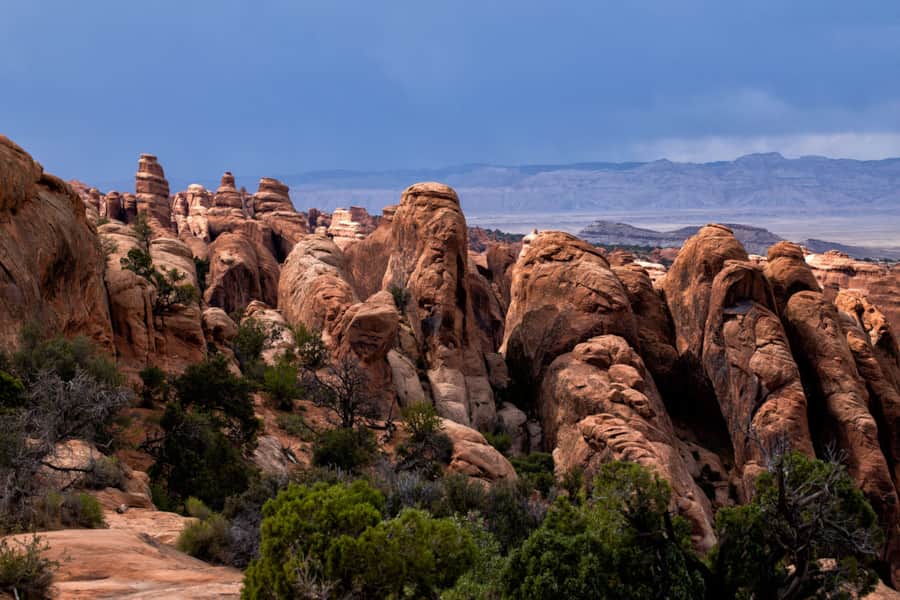
Devil's Garden in Arches National Park during afternoon peak visitation hours.
How do I get to Arches?
How far is it from Salt Lake City to Moab?
A road trip from Salt Lake City to Moab takes just under 4 hours. Most of it is highway, starting with interstates through Salt Lake City and Provo, then on to 2-lane byways through smaller towns including Springville, Spanish Fork and Green River.
How long does it take to drive from Las Vegas to Moab?
A road trip from Las Vegas, Nevada, to Moab, Utah, takes about 6.5 hours. The route passes through the bustling Utah towns of St. George and Cedar City.
What's the drive time from Zion National Park to Arches National Park?
Many travelers want to combine a visit to Arches with a visit to Zion National Park. This makes sense considering they are Utah’s two most popular national parks. Starting in Springdale — the main entrance to Zion National Park — expect about a five-hour road trip to Moab. Want to visit all five of Utah's national parks? Try The Mighty 5: Ultimate Journey.
Visit With Respect
The red rock desert is a fragile ecosystem, and visitors should take special care to protect it. Practice Leave No Trace principles to ensure that all parts of the park are left as nature intended.
- Pack out everything you bring with you, including food wrappers, tissues and even crumbs. Arches requires visitors to pack out solid human waste, toilet paper and hygiene items. (Read: "How to Poop in the Outdoors")
- Stay on existing trails and do not travel off course or “bust the crust.” A single footstep can cause damage that lasts for decades. Rock cairns, or rock piles, are trail markers. Do not disturb them or add new ones, as they could mislead other hikers.
- Treat the arches and other geologic features with respect, both to protect them and for your safety. Walking, climbing and scrambling on arches — even for a quick photo — is not permitted.
- Leave rocks, plants, animals and natural objects as you found them. Never leave marks or scratches on rocks or other surfaces and admire artifacts and natural features from a distance without touching or disturbing. Tree carvings, rock etchings and spray painting are forms of vandalism and graffiti, which are illegal on public lands.
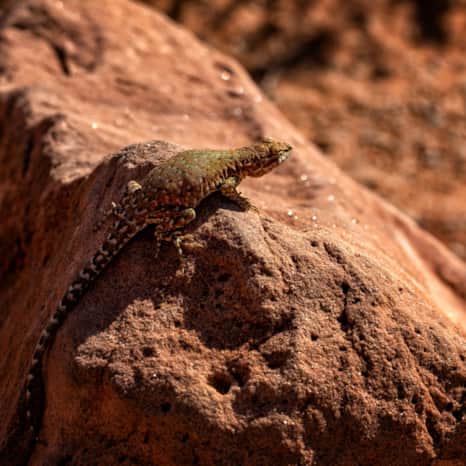
- Respect the wildlife that make Arches National Park their home. Keep your distance, and if an animal changes its behavior due to your presence, you are too close. Secure your food so animals cannot access it, and never feed wildlife.
- Camp only in designated areas on durable surfaces and follow all campfire rules and regulations.
- Leave drones and pets at home. The use of off-highway vehicles (ATVs, OHV, UTVs, etc.) is also not allowed in Arches National Park.
- Be courteous to other visitors by minimizing noise, yielding to others on trails and respecting trail and transportation signage.
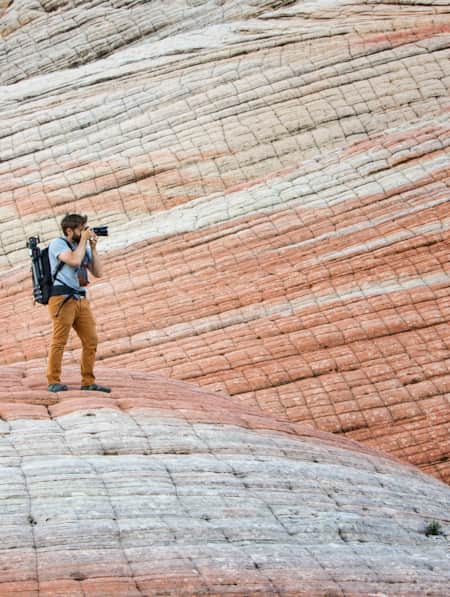
- Show consideration for other visitors, and be a mindful photographer. Arches is an internationally-certified Dark Sky Park, making it a prime location for night photography or stargazing (Panorama Point and the Windows Section are great spots for evening views). Do note that using artificial light sources to illuminate park features for photography is not permitted.
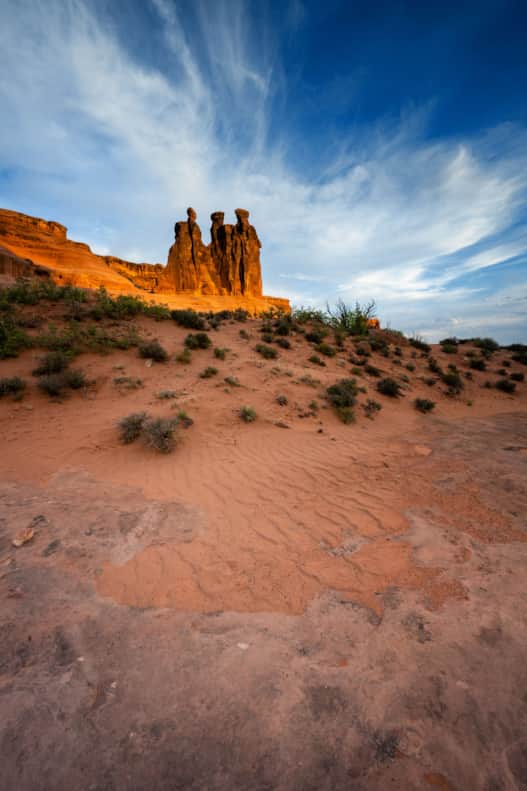
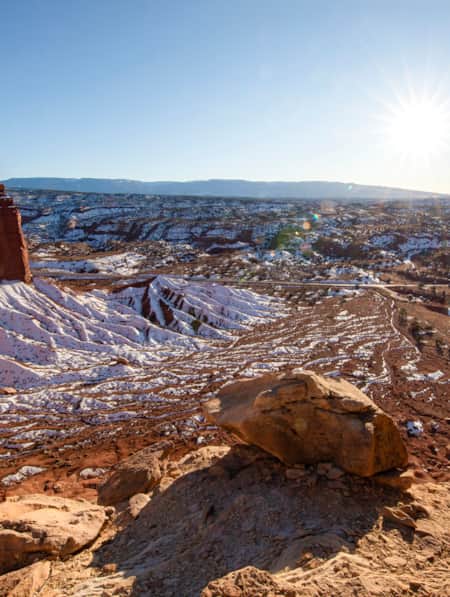
The red rock desert of Arches National Park is a fragile ecosystem, and visitors should take special care to protect it.
Photo: Angie Payne
"This wondrous landscape has evolved over 300 million years, and as visitors, it is our responsibility to protect this cherished land for future generations."

Take Care of Yourself
You can't fully experience Arches — or help protect it — if you're not taking care of yourself and your group first. Know what to expect, plan ahead and pack everything you'll need before you arrive. Food is not available inside the park, so come prepared.
Prepare for the Heat
Southeastern Utah gets hot. Daytime temperatures regularly exceed 100°F in summer, and most trails offer very little shade. Avoid peak heat by hiking in the early morning or late evening. Protect yourself with sunscreen, a hat, sunglasses and lightweight layers.
Stay Hydrated
Desert air accelerates dehydration faster than most visitors expect. Bring a minimum of one gallon of water per person per day and drink it consistently — before you feel thirsty. Refillable water stations are available at the visitor center and Devil's Garden parking area.
Pack Your Essentials
Come self-sufficient. Bring water, food, a map, sturdy footwear, sun protection and a first aid kit. Even heavily trafficked trails like Delicate Arch and Devils Garden see rescues every year. There are no food services in the park, so pack everything you need for the day.
The Complete Arches Trip
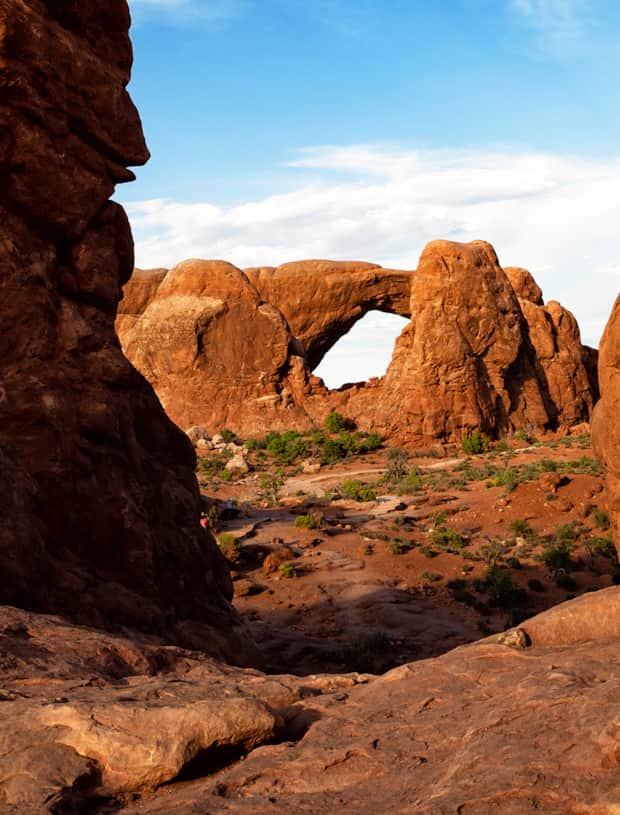
Discover a new side of Arches National Park with this four day itinerary. Start exploring the hidden gems in the Arches region today.
Highlights
- Arches National Park
- Colorado River Rafting Trips
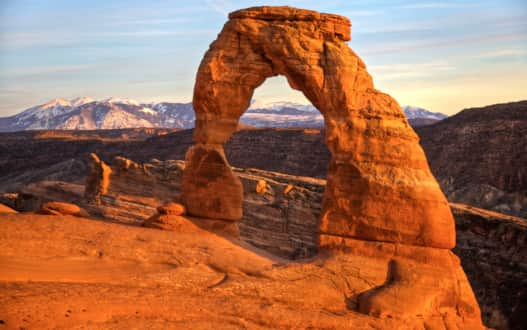
- Delicate Arch
- Dead Horse Point State Park
- Manti-La Sal National Forest
Start Planning
-

Arches National Park
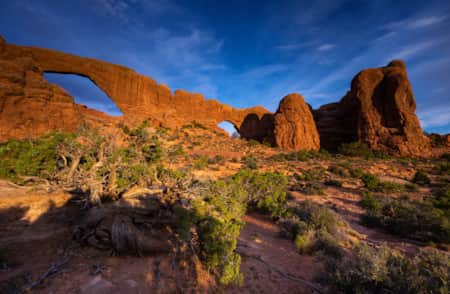
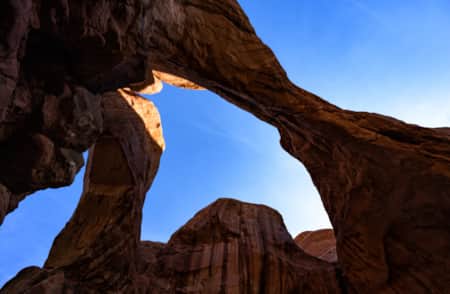
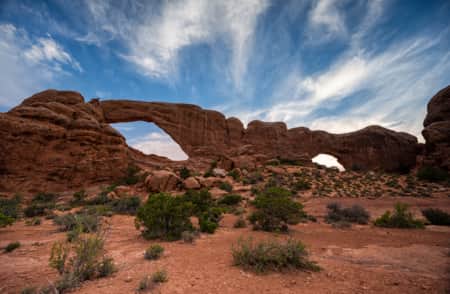
Arches National Park contains more than 2,000 natural arches—the greatest concentration in the country. Find places to stay, itineraries, reservation info and weather for Arches, Moab and Canyonlands National Park.
-
Arches National Park Hikes
Arches National Park is one of the most popular hiking destinations in Southern Utah. Start planning your hiking trip with these trails!
-
Camping
An otherworldly landscape of stunning red sandstone provides the perfect backdrop for a camping adventure.
-
Things To Do In Arches National Park
Arches National Park is a vast playground for the adventurous, where everyone can find an unforgettable experience.
-
Winter in Arches
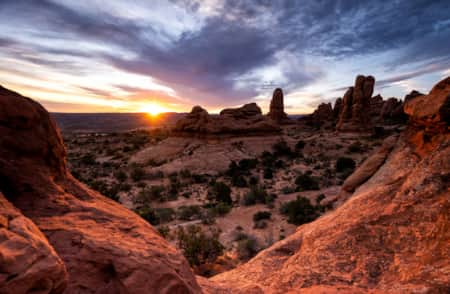
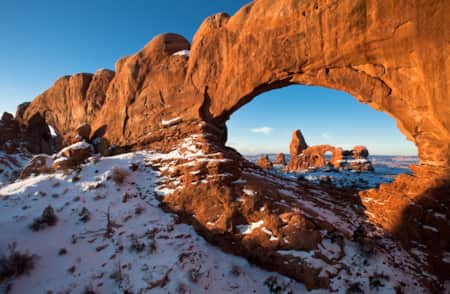
Skip the crowded peak season and embrace the quiet of a winter visit to Arches National Park. Enjoy winter hikes, scenic drives and some of the best stargazing in the world.
Discover More
-
5 Expert Tips to Prepare for Your Utah National Parks Adventure
If you’re planning to visit Utah national parks for a hike, learn important tips to maximize your experience and keep you and your family safe.
-
A Photographer’s Guide to Mindful Travel
Utah's deserts are a photographer's dream, yet very fragile. Find out how photographers can take a few simple steps to care for this unique environment.
-
A Van Lifer’s Guide to Responsible Travel in Southern Utah
When Utah’s dirt roads are calling you, it’s time to plan your van life road trip. Here’s what you need to know to travel safely, support Utah’s rural communities, and help preserve the delicate desert landscapes.
-
A Winter’s Desert: Visiting Southern Utah in the Slow Months
Experiencing the peace of canyon country in the winter is an attraction of its own.
-
How To Stay Safe in the Outdoors
Know how to stay safe and informed during your Utah trip and who is helping when you get into trouble.
-
The Complete Winter Camping Packing List for Staying Warm in Southern Utah
For most travelers, Southern Utah winters prevent comfortable camping, and occasional snowfall can make outdoor adventure a little more challenging. With a little extra planning, good layers, and the right equipment, however, you can enjoy Utah's national parks in the solitude of winter.