Finding My Footing on the Ashley Gorge Via Ferrata in Vernal, Utah
It’s the longest free via ferrata in North America.

“Do I have to walk on that?”
Dozens of iron rungs snake their way from the canyon floor to where I stand hundreds of feet in the air against the white rock cliffs of Ashley Gorge near Vernal. My courage jitters as I look at the suspended highwire I will have to walk across to get to the next part of the via ferrata course. Even though my lanyard will be clipped onto a safety cable, it feels like I’m being asked to walk on air.
My guide, Jasmynn from Dyno Outfitters, who sat on the other side of the line, laughed at my wide eyes and gaping mouth. She gives me pointers on how to walk, how to clip in my rest carabiner so I’m extra secure.
Via ferrata means “iron way,” and I lean on the steadiness of that name whenever a rare part of the course, like this one, makes my breath hitch.
Trust your gear, trust the cable. Trust your gear, trust the cable.
I clip in. I inhale. I put one foot on the line. Then I walk.
What is a Via Ferrata?
I didn’t really know what a via ferrata was until one of my friends booked a solo trip to Switzerland a few years ago. A quick search for travel inspo showed helmet-clad adventurers traversing a cliff face, Swiss hamlets looking like miniatures in the green belly of the valley below. The photos take your breath away. The climbers look like mountain goats scaling the cliffside on the edge of their hooves.
Originating in Austria, via ferratas were expanded during World War I to transport troops, equipment and artillery across mountain passes. When the war ended, the routes took on new life. Climbers scaled them for fun, locals maintained them, and from that blossomed a new form of recreation with the thrill of climbing and the accessibility of hiking (albeit with more upper body strength involved).

Just north of Vernal, Ashley Gorge is Utah's first public via ferrata and the longest public via ferrata in the Northern Hemisphere.

The half-day course takes approximately 4 to 6 hours and the full-day course takes 8 to 10 hours.

On the course, you'll find exposed rock face climbs and cable bridges suitable for both beginners and more experienced climbers.
Navigating the Course with Dyno Outfitters
Almost all via ferratas now require a guide. Uniquely, the Ashley Gorge Via Ferrata is the longest public route in North America that doesn't require one—though hiring a guide is still recommended. It’s also surprisingly accessible in other ways. A 30-minute drive from Vernal puts you right at the trailhead (Read: Vernal: Your Easy, Outdoor Adventure Destination). You won’t have cell service here — you won’t want it. You won’t have time to want it, with your hips and calves propelling you topside and your gloved hands clinging for hours.
As someone who’s rock climbed on and off for 16 years, I’m still grateful Jasmynn is here to guide our small group through the course. It’s just me and a young woman named Angie who’s flown in from Texas to try the via ferrata and the Moab Rope Swing. She likes to get out of her comfort zone, she says. She saw a video of this on social media and wanted to try it. I’m inspired by her.
Jasmynn inspires me, too. She teaches us where to place our feet on the rungs, how to position our lanyards when we move from section to section, and where there are technical problems to navigate. In between that, she shares how the via ferrata has changed her life. She’s a single mom of two young girls who has experienced domestic violence. The via ferrata has given her a way to support her family. It seems both the physicality and metaphor of the course have helped her navigate her own life’s course.
“If I can get a bit philosophical here, the via ferrata is a lot like life. You never know what’s around the corner. You just have to move through it,” she tells us.
Jasmynn and her fellow Dyno Outfitters guides aren’t just there to lead people through the winding path of Ashley Gorge. They are Wilderness First Responders, too. Jasmynn carries a yellow pack and neon orange rope on her back from the moment we start hiking the 600-foot elevation gain to the start of the via ferrata to the moment we arrive back at the parking lot. If at any moment her clients need medical help on the course, she’ll assess risk and respond to their needs.
Jasmynn watches our hands closely to make sure we’re clipped in as we descend into the canyon. It’s easy to get too excited and not fully close a clip, to clamber down the rungs, leaving our carabiners to catch on the cable bolts above us. I quickly learn that the via ferrata is not something you speed through. It doesn’t allow you to. Every stretch of the course is a dance between climbing, descending, unclipping and reclipping. It’s slow at times, but it also lights up the part of my brain that thrills at a puzzle. Like climbing, it works new muscles, and the novelty of the movement is a propellant.
Angie and I both make quick work of the descent into Ashley Gorge. We’re doing the half-day route, but both of us chatter excitedly about how much we’d love to go further and do a full day. The descent into the Gorge energizes us. The ascent is more challenging.
"If I can get a bit philosophical here, the via ferrata is a lot like life. You never know what’s around the corner. You just have to move through it."

The "Abduction" Ascent
In a fun nod to Vernal’s rich history of paranormal sightings, the climb out of the canyon is called Abduction. Getting out isn’t a weightless, X-Files-esque float into the sky. It’s a sweaty, panting effort. I’m grateful for my helmet when I lift off one rung and my head bashes into another. There’s more technicality required in this stretch. More careful footwork. More effort to pull my carabiners up the cable alongside me than there was to pull them down. I’m tired, but I can’t stop smiling.
“This is wild,” I say. Over and over again.
When I clip my rest carabiner into a rung and lean back to look around me for a beat, I see a line of climbers scaling a ladder and working on an overhang on the full-day route across the Gorge. The sun is fully on their backs at 11:30 a.m. The shade of the cliff protects Angie, Jasmynn and me from the brunt of its rays. I picture my upcoming weekends and plan out which day and what time I could come back. It’s incredibly easy to already miss the via ferrata in the middle of experiencing it.

Braving the Windwalker Cable
On the suspended highwire near the end of the course, I’m walking one foot in front of the other.
My right hand grasps the cable my carabiners are clipped into. Below my pink hiking shoes, all I can see are a couple hundred yards of cliff and trees that swirl and blur together. I’m laughing and there’s a nervous clip in the sound. Jasmynn laughs with me, thrilling at seeing Angie and me experience this new and wholly unexpected obstacle.
Halfway across the cable, I switch to a sidestep. I’m too short to unclip my rest carabiner without standing on my tiptoes and getting a hand from Jasmynn. As quickly as it arrives, the highline portion of the trail ends. I scramble up onto the next rung and breathe a sigh of relief.
Jasmynn hypes me up and asks me how it was. I don’t remember what I say in the moment. On the hike back to the parking lot later, I’ll tell her the highline, what the crew calls Windwalker Cable, was my favorite part, which surprises me a little. It was one of the parts that scared me most.
As we move onward and upward, cresting the lip of the canyon in our final push, the red and yellow plateaus of the Uintah Basin seem to unroll around us. The via ferrata is the only way to see them this way, unless we were to sprout feathers and join the ravens who slide like shadows against the creamy walls of the Gorge, or morph into the strange lights so many people have claimed to look up and see in the skies here.
In the end, it does feel a bit like floating.

Sandstone Spires & Swimming Holes
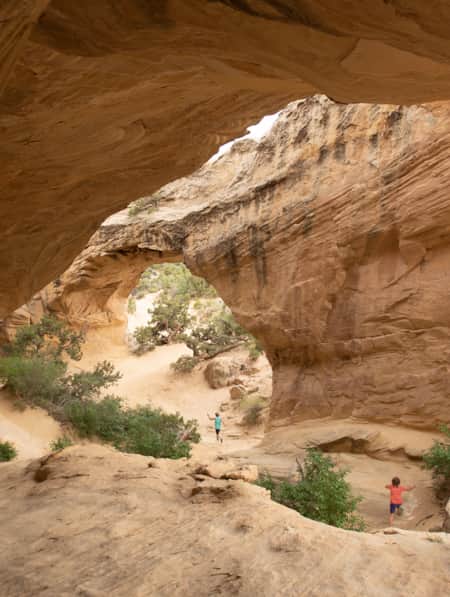
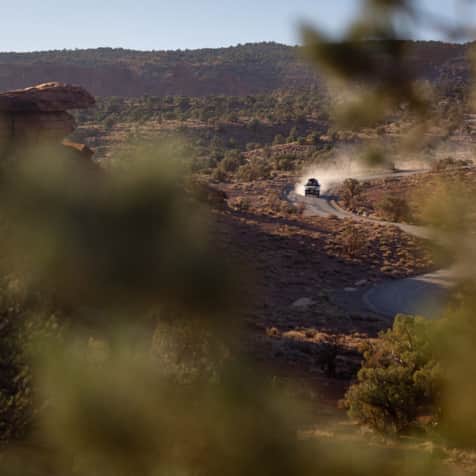
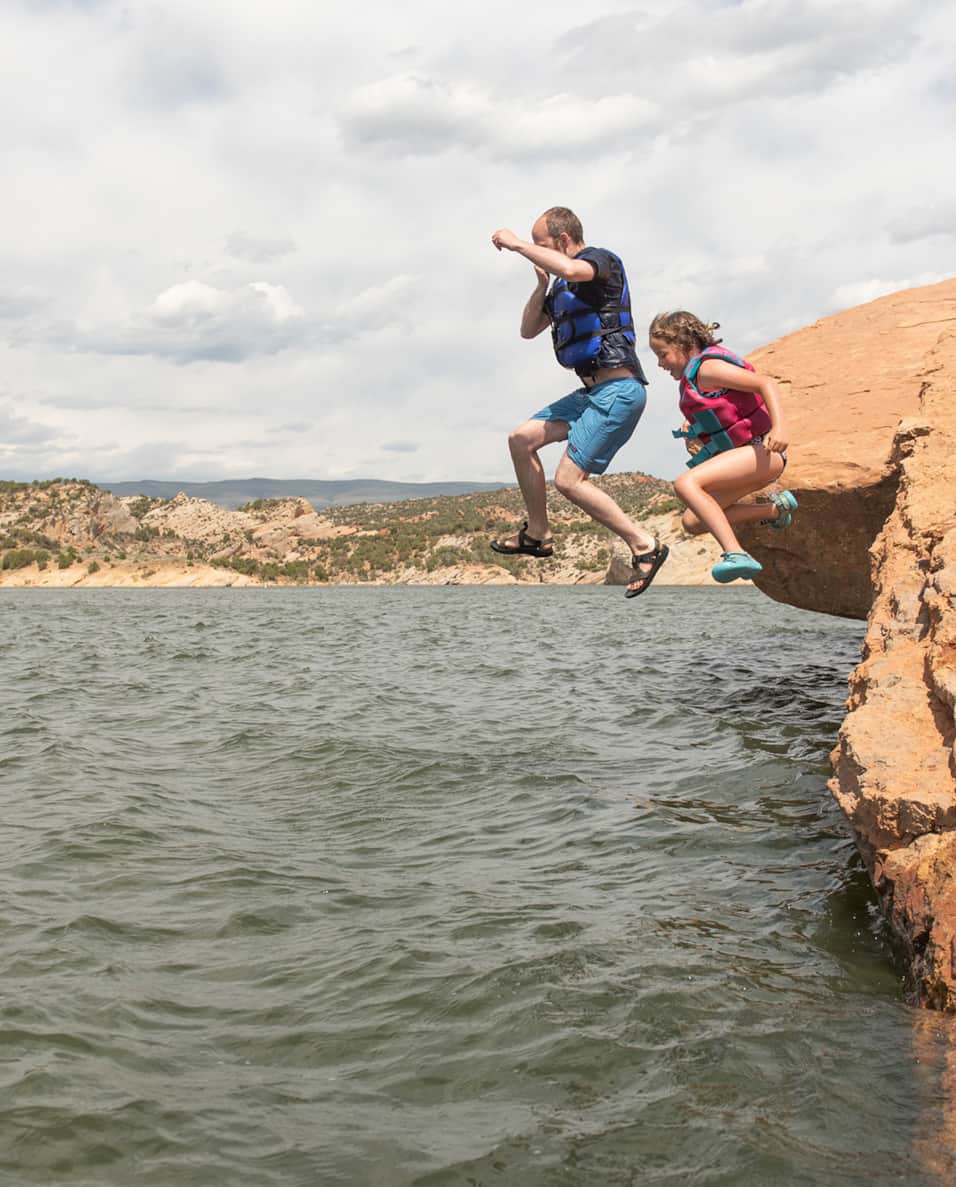
Walk the paths of dinosaurs and descend through 200 million years of geologic history in this six-day road trip from Vernal to Kodachrome Basin. It’s a kid-friendly desert drive in search of dino tracks, slot canyons and swimming,
Highlights
- Dinosaur Tracks in Vernal
- Crystal Geyser in Green River
- Hoodoos & Slots of Goblin Valley
- The Red Cliffs of Capitol Reef
- The White Cliffs of Grand Staircase
- Sandstone Spires in Kodachrome Basin
Higher Octane
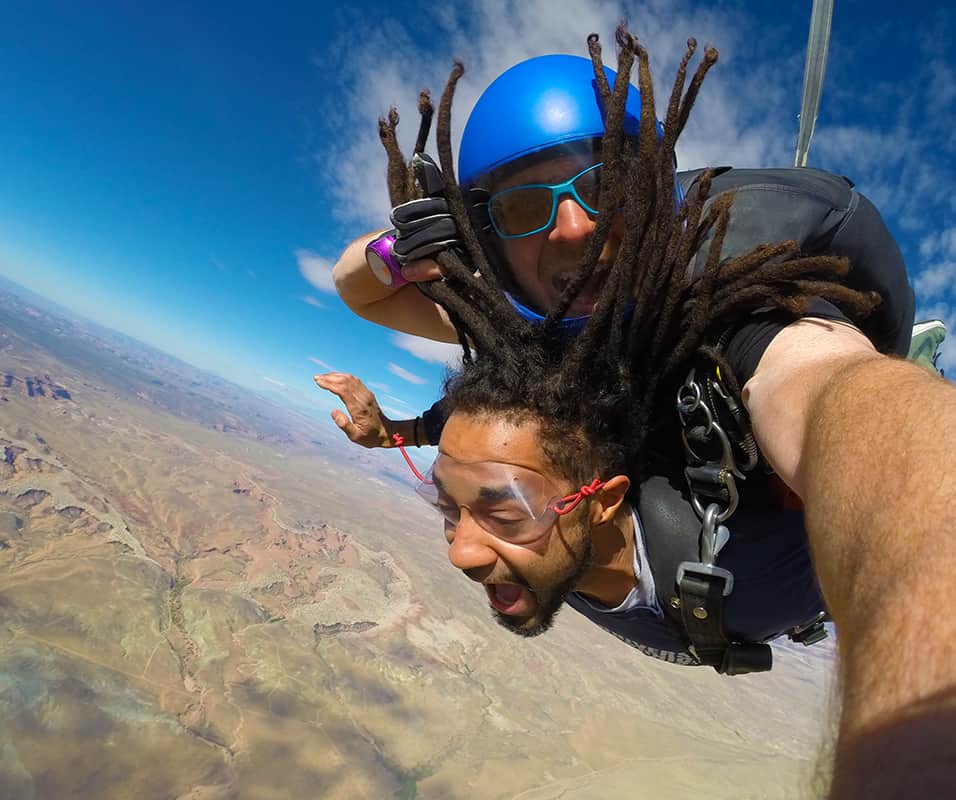
Ready for the most adrenaline-inducing, heart-hammering adventures Southern Utah has to offer? Whether you’re into bombing single track, charging Class V rapids, tackling hidden trails or jumping out of planes — we've got nine days of thrills for you to cross off your bucket list.
Highlights
- Green River Rafting
- Moab Mountain Biking
- White Rim Trail
- Heart Hammering Adventures
- Skydive Moab
Denver to Moab: A High-Octane Weekend Road Trip
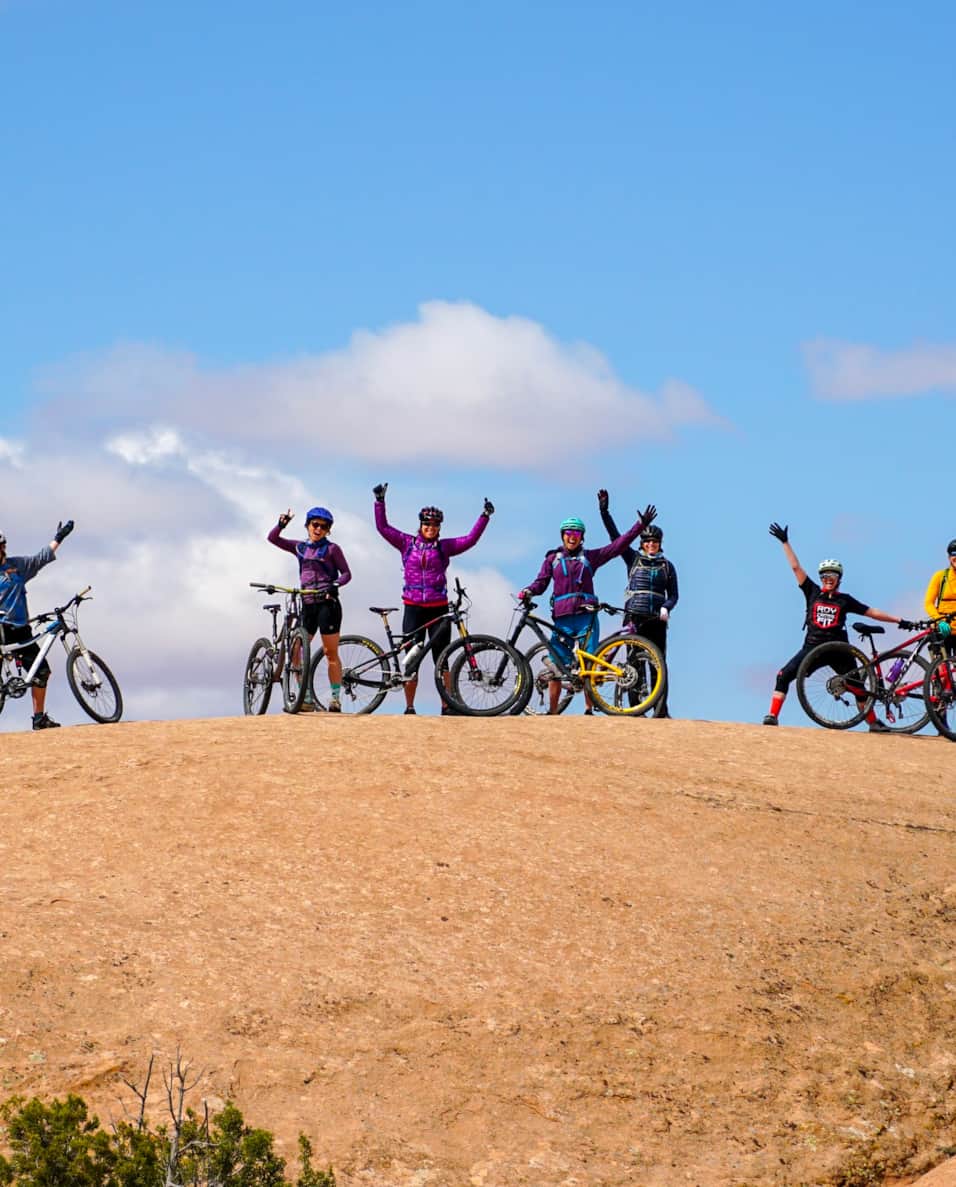
Start planning your road trip from Denver to Moab with three days of mountain biking, hiking, skydiving, rafting and experiencing the best of Moab.
Highlights
- Colorado River Rafting
- Moab Mountain Biking
- Skydive Moab
- World-Renowned Mountain Biking
Stories To Inspire Your Travel
-

Vernal: Your Easy, Outdoor Adventure Destination
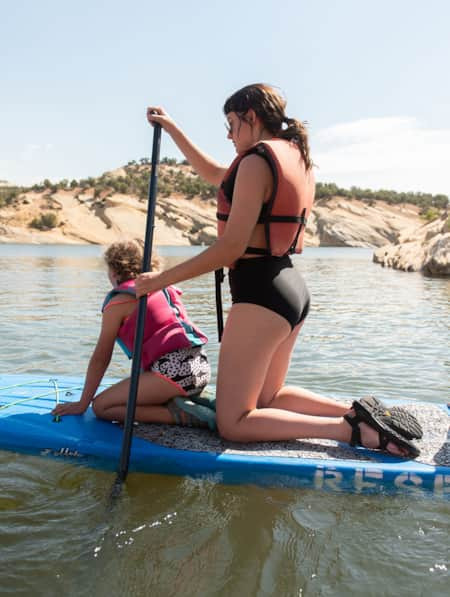
Vernal is famous for its dinosaur fossils, but this "Dinosaurland" also offers easy access to a variety of outdoor adventures, from rafting and paddleboarding to rock climbing.
-
Yurt Camping in Utah: How To Have a Wintertime Yurt Excursion
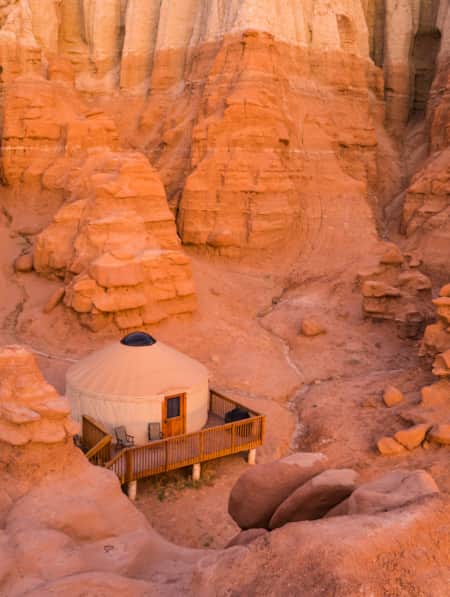
Whether you’re glamping or choosing a simpler option, yurt camping in Utah during the wintertime is a fun, unique experience you won’t want to miss out on.
-
Dinosaurland Top 5
Vernal, Utah, is an adventure base camp to the best of eastern Utah. Uintah County around Vernal — called Dinosaurland — is home to diverse outdoor recreation and natural history at three state parks, Dinosaur National Monument and countless trailheads to the Ashley National Forest.
-
Get Your Spook On: Northern Utah's Most Haunted Places
Looking for a different kind of adventure? One seemingly outside the realms of possibility? Here are some of Utah’s most haunted places.