Canyonlands National Park
Things To Do
-
Backpacking
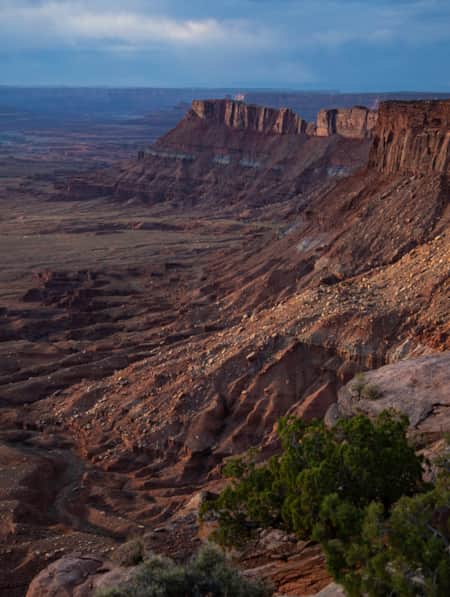
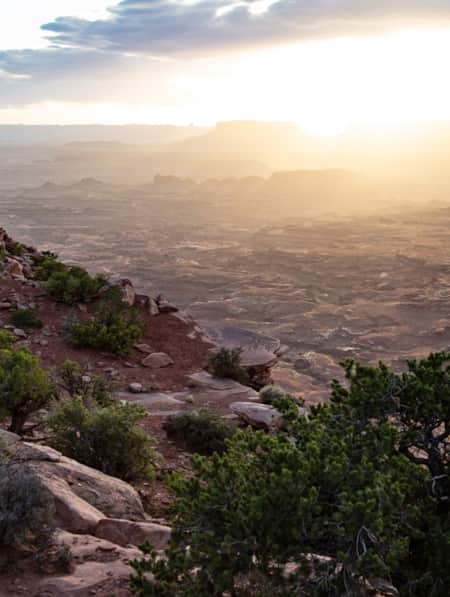
The park is divided into three regions: The Needles, Island in the Sky, and The Maze. Each region offers secluded backpacking, incredible views, and exciting hikes. Before your trip, be sure to learn more about permits and what to pack.
-
Camping
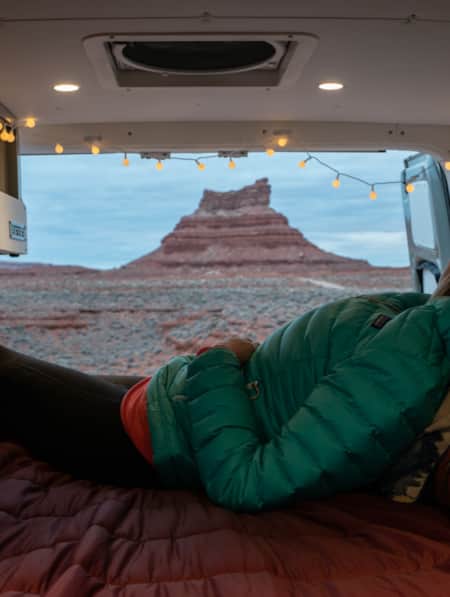
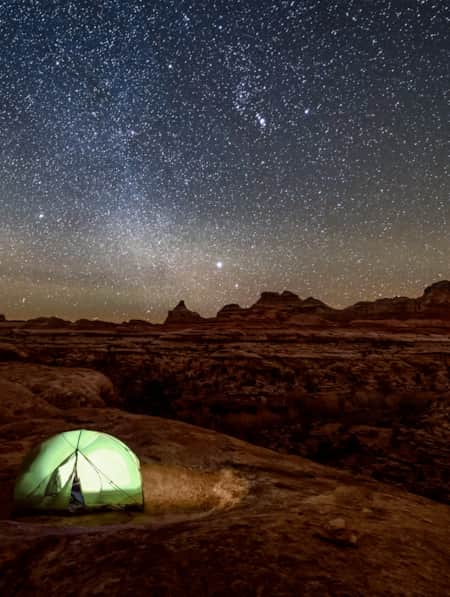
Amidst the park’s canyons you’ll find countless places to set up camp. The park houses two established campgrounds, Needles Campground and Willow Flat Campground, as well as numerous backcountry campsites (permits required).
-
Hiking
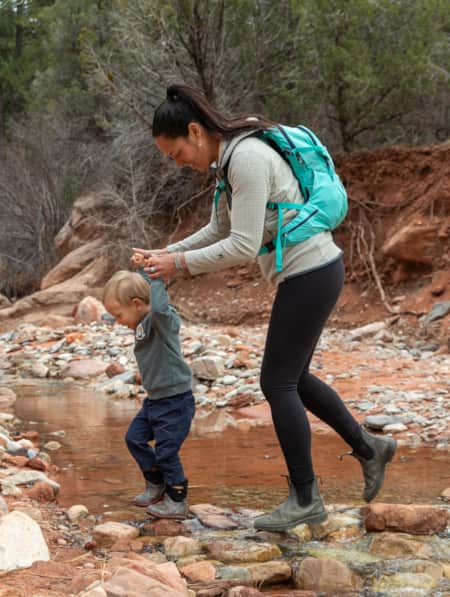
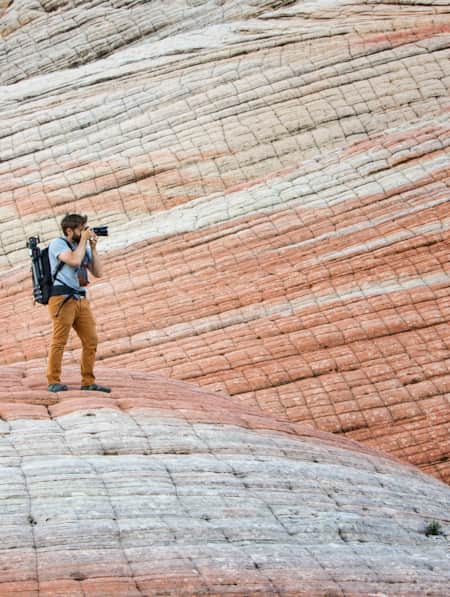
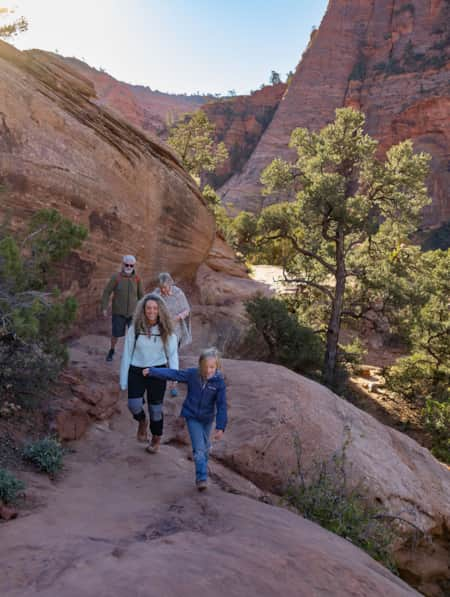
Hiking at Canyonlands National Park is a dream come true for day hikers and thru-hikers alike. Visit The Needles District for access to over 70 miles of hiking, or bring the family to the awe-inspiring Mesa Arch.
-
Rafting
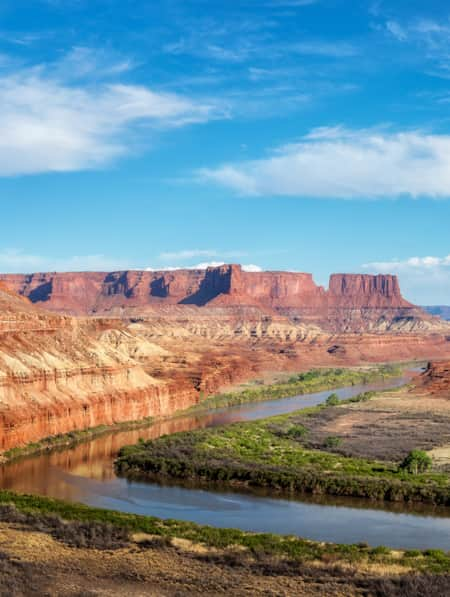
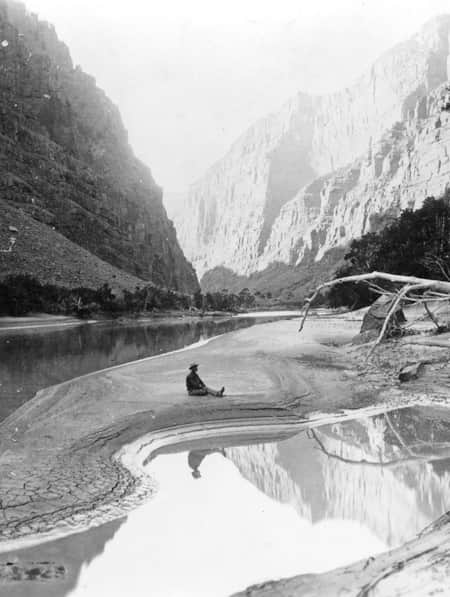
Spend a day or two floating the same rivers that ultimately formed Canyonlands. Venture down the adventurous Cataract Canyon with its Class V rapids, or relax as you float calm waters under impressive cliff sides.
-
Tours
With over 500 square miles of park to explore, knowing what to prioritize can be daunting. Book a trip with a local guide to visit must-see destinations and learn about the park’s interesting past.
-
Winter Activities
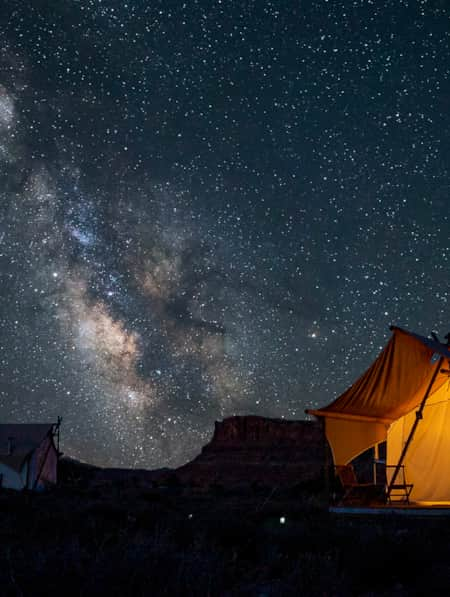
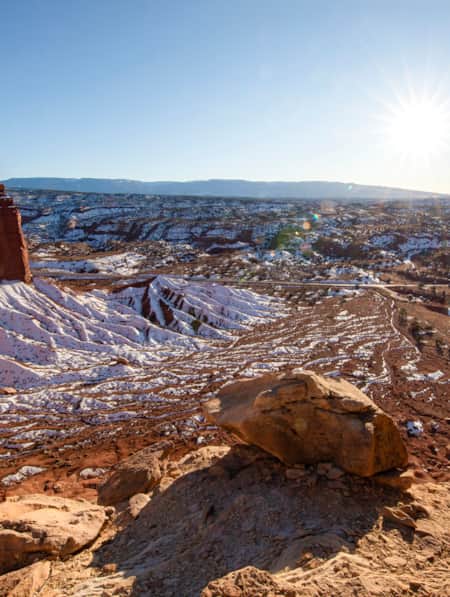
As the largest national park in Utah, Canyonlands provides a variety of winter adventures. Fewer people visit the park in the winter, allowing each visitor to experience more solitude. Take advantage of hiking the quiet trails, photographing landscapes in the soft winter light and stargazing on the longest nights of the year.


The Figure 8 offers a multi-day packrafting journey to witness nature's artistry up close.
Photo: Jeremiah Watt
A Multi-Day Packrafting Journey in Canyonlands
"...Your third day finds you floating back through the confluence with the Colorado, and down to Spanish Bottom. Taking out on your starting side of the river, it’s time to roll up your boat, stash it on your pack and begin the trek up Red Lake Canyon to a campsite for the evening." (Read: A Photo Essay: Canyonlands Figure 8)
"There are few things tastier than a cold beverage and good meal after four days in the wild...Moab Brewery for cold beer and excellent burgers, Doughbird for exotic doughnuts, espresso and fried chicken or classic Mexican fare at Miguel’s."
– Jeremiah Watt, photographer
01
The Complete Canyonlands Trip
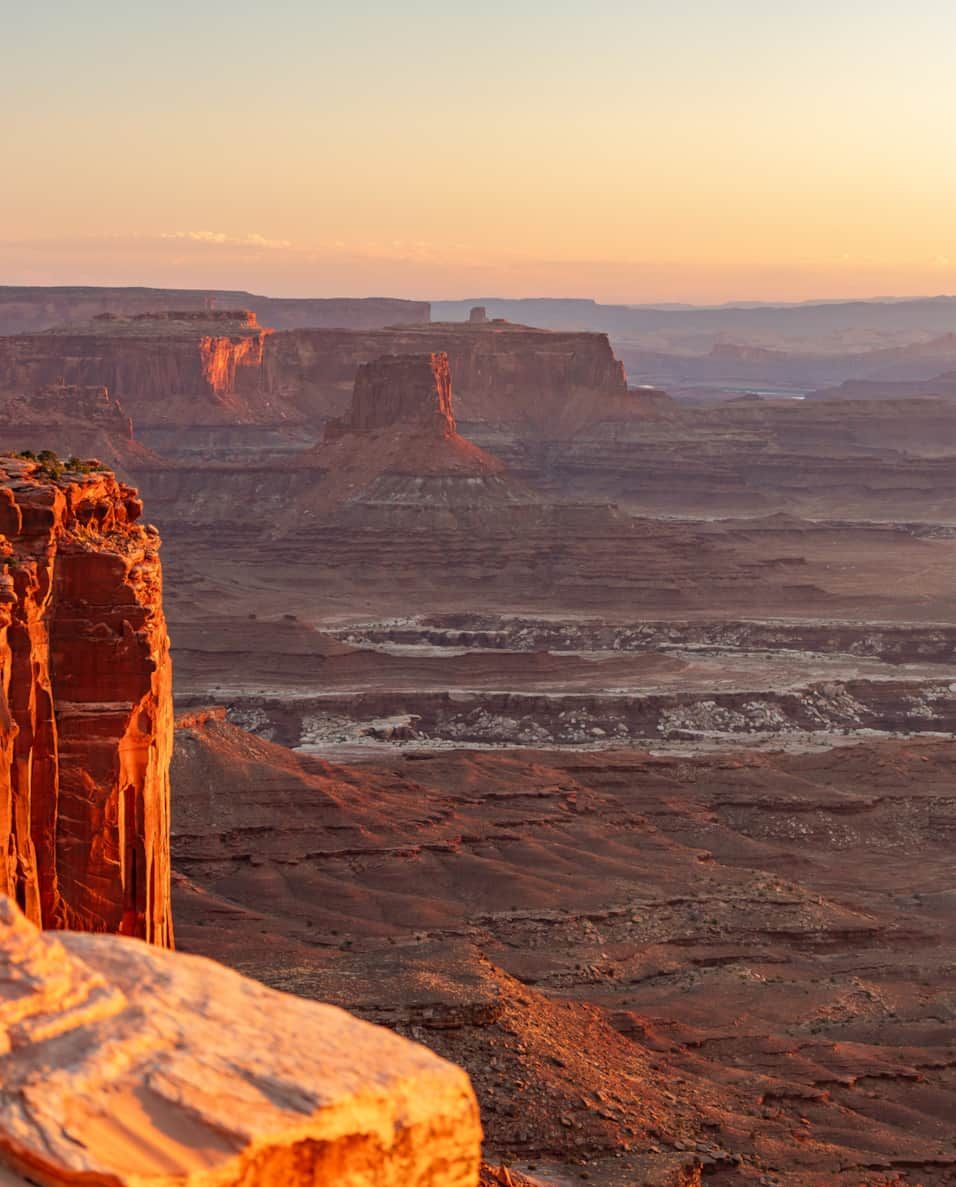
The Canyonlands Region of Utah combines the best of the Moab area's easy proximity to Arches National Park and Canyonlands National Park's most accessible district with some of the United State's most remote and culturally significant landscapes.
Highlights
- Canyonlands National Park
- Dead Horse Point State Park
- Bears Ears National Monument
- Natural Bridges National Monument
- Monument Valley Navajo Tribal Park

02
Salt Lake City to Moab
Moab is Utah’s adventure epicenter — a place where world-renowned natural destinations are scattered around a town that’s brimming with local charm. Be sure to bring a vivid imagination and taste for exploration along with your hiking shoes, sunscreen and water bottle, because this is not your typical retreat.
Highlights
- Arches National Park
- Guided 4x4 Wheeling
- Canyonlands Stargazing
- Floating the Colorado River

03
The Mighty 5: Ultimate Journey
Grab a national parks annual pass for best access to The Mighty 5®.
Highlights
- Arches National Park
- Bryce Canyon National Park
- Canyonlands National Park
- Capitol Reef National Park
- Zion National Park
Nearby Towns
-
Bluff
Rich in human and natural history, Bluff is a central point along the Trail of the Ancients National Scenic Byway. It is a gateway to Monument Valley, Bears Ears National Monument, Valley of the Gods and Hovenweep National Monument.
-
Green River
The city of Green River was once a stomping ground for Butch Cassidy and his Wild Bunch, and is a haven for river runners who raft places such as Desolation and Gray Canyons.
-
Moab
Moab is surrounded by a sea of buckled, twisted and worn sandstone sculpted by millennia of sun, wind and rain
-
Monticello
The southeastern Utah town of Monticello lies on the sheltered eastern slope of the Abajo Mountains, overlooking a maze of sandstone canyons and plateaus.
Canyonlands National Park FAQs
Where should I stay?
The best base camp for exploring the park is Moab, Utah, which sits about 30 to 40 minutes from the main entrance. The Hoodoo Moab, Radcliffe Moab or Hyatt Place Moab are great choices for traditional hotels. SpringHill Suites and Fairfield Inn & Suites are located on the north end of town for the quickest access to the park. If you prefer glamping, ULUM Moab and Under Canvas Moab offer luxury outdoor stays.
How far is Canyonlands from Vegas? Where do I fly in for Canyonlands?
The drive is approximately 480 miles and takes seven to eight hours via I-15 and I-70. It’s a long haul for one day, so take advantage of the other Mighty Five parks along the way to break up the trip.
The closest airport is Canyonlands Regional (CNY), just 30 minutes away, though it has limited flights primarily through Denver or Salt Lake City. Grand Junction (GJT) is the easiest regional option. It's two hours away with more airline variety, while Salt Lake City (SLC) is the best for value, offering the lowest prices and best car rental availability despite being a four-hour drive.
Are dogs allowed?
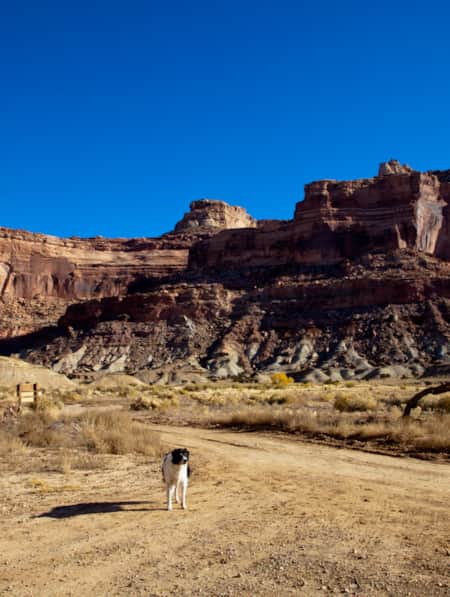
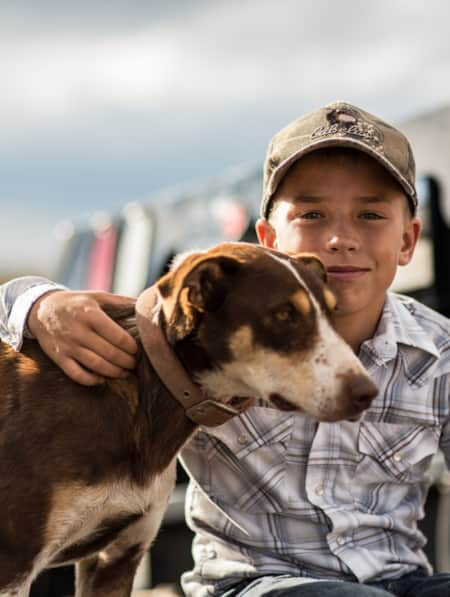
Pets are strictly limited within the park and are not allowed on any hiking trails, at overlooks, or in the backcountry. They are only permitted on paved roads, in parking lots and within established campgrounds. However, due to extreme desert heat and trail restrictions, it is highly recommended to leave your dogs at home.
How many days should I spend at Canyonlands?
Most travelers find one to two days is the perfect amount of time. You should focus entirely on the Island in the Sky district if you only have one day. It is the most accessible area and offers those iconic top-down views of the canyons. You can head south to The Needles district for a more intimate and rugged experience among the rock spires if you have a second day. Those looking to truly get lost in the backcountry or tackle the remote Maze district should plan for three days or more.
Can I drive through Canyonlands?
You can drive within the individual districts, but you cannot drive across the entire park. The Green and Colorado rivers carve deep barriers through the landscape, so no connecting roads exist between the districts. You must exit the park and drive about two hours around the perimeter to get from the Island in the Sky to The Needles.
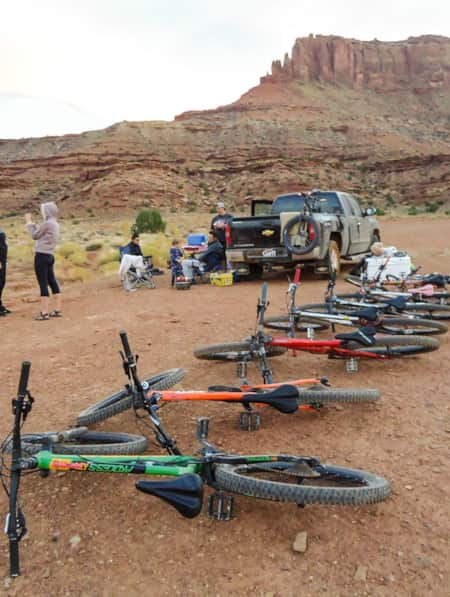
The main scenic loops are paved and perfect for standard cars. Canyonlands is also famous for its intense 4WD tracks. Routes like the White Rim Road or the Shafer Trail offer incredible views but require high-clearance vehicles and specialized permits. You will likely stick to the paved spurs that lead directly to the most famous overlooks and trailheads.
More Canyonlands Inspiration
-

5 Expert Tips to Prepare for Your Utah National Parks Adventure
If you’re planning to visit Utah national parks for a hike, learn important tips to maximize your experience and keep you and your family safe.
-
5 Places You Can Try Glamorous Camping in Utah
Experience the fun and adventure of glamping — camping with a side of luxury.
-
6 Steps to a Family MTB Trip on Canyonlands' White Rim
Want to take the family mountain biking on the White Rim Trail? Tackle 100 miles of biking and three days of backcountry camping in Canyonlands with the kids.
-
A Guide to the Many Faces of Utah's Green River
The mighty Green River carves a path through a dramatic and varied landscape of mountains, canyons and desert for 730 miles across Utah. Whether you have a few hours or a few weeks, experience the diversity of this river yourself by getting on the water.
-
A Photographer’s Guide to Mindful Travel
Utah's deserts are a photographer's dream, yet very fragile. Find out how photographers can take a few simple steps to care for this unique environment.
-
A Van Lifer’s Guide to Responsible Travel in Southern Utah
When Utah’s dirt roads are calling you, it’s time to plan your van life road trip. Here’s what you need to know to travel safely, support Utah’s rural communities, and help preserve the delicate desert landscapes.
-
A Winter’s Desert: Visiting Southern Utah in the Slow Months
Experiencing the peace of canyon country in the winter is an attraction of its own.
-
Ancient Pictographs, Petroglyphs and Timeless Mysteries
Exploring Horseshoe Canyon isn’t for everyone. First of all, the effort to get there is an adventure in itself, but those efforts make the reward — namely, the chance to see up close some of the most significant pictograph panels in North America — even more noteworthy.
-
Backpacking in Canyonlands National Park
Canyonlands National Park offers a spectrum of backpacking opportunities — from short trips at designated backcountry campsites to longer, adventurous trips that require extensive planning and desert canyon navigational knowledge.
-
Be Prepared for the Southern Utah Backcountry
Prepare for a trip out into Utah's rugged red rock backcountry by learning as much as possible about the area before heading out. Stop by a ranger station to educate yourself and pick up necessary permits. Always practice good backcountry ethics and proper safety techniques for a safe and enjoyable adventure.
-
Chasing John Wesley Powell: Six Places to Explore Utah's Green and Colorado Rivers
One hundred and fifty years ago a one-armed Civil War veteran set off with nine mountain men on a scientific expedition to map one of the last blank spaces left on the U.S. map: The Green and Colorado rivers. Much of the river remains wild today. Follow Powell's journey here.
-
Dog-Friendly Utah: The Road to Mighty
Want to bring your furry friend on your next vacation? Utah is home to several great dog-friendly national parks and other fun destinations. Check it out and plan your trip!
-
Filmed in Utah: 7 Itineraries Through Hollywood's Most Iconic Settings
While Utah's striking scenery makes it a go-to for filmmakers, the state is equally a must-visit for road-trippers and outdoor adventurers. Here are a few film and television-themed trips and tips to consider for your Utah visit.
-
HBO's Westworld. See it now, in Utah.
Where is Westworld filmed? Much of Castle Valley is actually located in Utah. Learn more about the setting of your favorite television series.
-
How to Support Local On Your Utah Road Trip
Many small businesses in Utah rely on tourism for survival. These expert tips help road trippers make a real difference in communities by supporting local.
-
Movies Filmed in Utah: Plotting a Cinematic Drive-Through
Follow a Germany-based film enthusiast on an extended road trip to discover the rich history of Utah cinematography.
-
The Complete Winter Camping Packing List for Staying Warm in Southern Utah
For most travelers, Southern Utah winters prevent comfortable camping, and occasional snowfall can make outdoor adventure a little more challenging. With a little extra planning, good layers, and the right equipment, however, you can enjoy Utah's national parks in the solitude of winter.
-
The Freedom of Wild Places
Clutching my hat with both hands, the wind roared and whipped by as I stood atop a rugged red rock formation, gazing out into the vastness of The Needles district of Canyonlands National Park.
-
Top 10 Family-Friendly Hikes in Utah National Parks
With so many destinations, and so many trails, it can be difficult to decide where to begin in Utah's Mighty 5® national parks. Here are 10 family-friendly hikes, two per national park, you cannot miss.
-
Touring the Indian Creek Corridor Scenic Byway
Prepare to be captivated as you drive along Indian Creek Utah’s Corridor Scenic Byway. Explore the Needles District, Canyonlands NP and admire Utah’s natural beauty.
-
Traveling with Dogs: The Mighty 5 National Parks
At all of The Mighty 5® national parks, activities with pets are extremely limited, and every time your dog is out of your vehicle, it must be restrained in a crate, cage, or on a leash (of no more than 6 feet).
-
Turning the Lens on a Wintry Southern Utah
Discover some of the most picturesque places to photograph in Southern Utah, and learn some tips for how to shoot and travel responsibly.
-
Utah Liquor Laws Visitor Guide — Yes, You Can!
In preparation for your trip to Utah, here’s what you need to know about Utah's liquor laws, especially how and where to buy a drink in the city or in the rural parts of the state.
-
Valley of the Gods Bed & Breakfast
The Valley of the Gods B&B is a gem for travelers looking for a convenient, comfortable place to spend the night in Bears Ears.
-
Winter in Southeastern Utah: Arches and Canyonlands
Want to avoid the Utah national park crowds? Plan a winter Southeastern Utah trip. Experience more peace, quiet and solitude.